

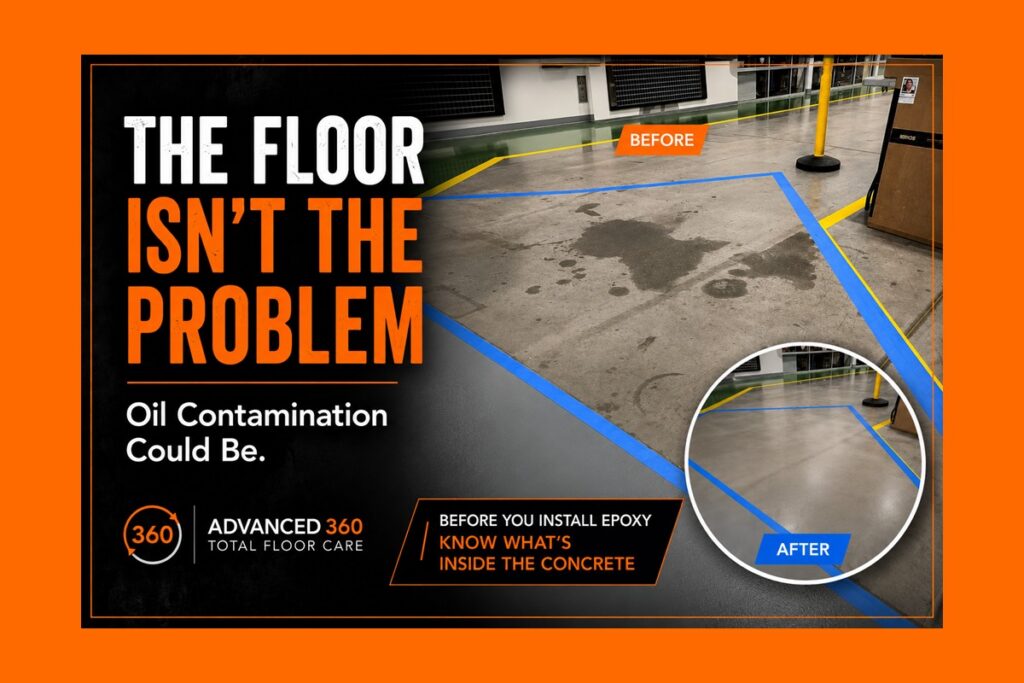
Is Your Warehouse Floor Saturated With Oil?
Many warehouse managers, facility managers, maintenance managers, and production managers throughout Kansas City face a frustrating problem.
They have an area of their warehouse or manufacturing facility that has been exposed to oil, grease, hydraulic fluid, and industrial contaminants for years.
The area may have been used as:
- A maintenance shop
- Equipment repair area
- Forklift service bay
- Manufacturing work cell
- Machine room
- Production area
Now the facility wants to repurpose the space.
Perhaps you want to install warehouse epoxy flooring.
Perhaps you want polished concrete.
Perhaps you simply want a cleaner, safer, more professional-looking floor.
The challenge is that oil-contaminated concrete can be one of the most difficult industrial floor problems to solve.
Why Oil-Contaminated Concrete Causes Floor Failures
Oil doesn’t simply remain on the surface of the concrete.
Over time, it penetrates deep into the slab.
Many facility managers assume the floor can be cleaned, ground, and coated.
Unfortunately, contamination trapped inside the concrete often causes problems later.
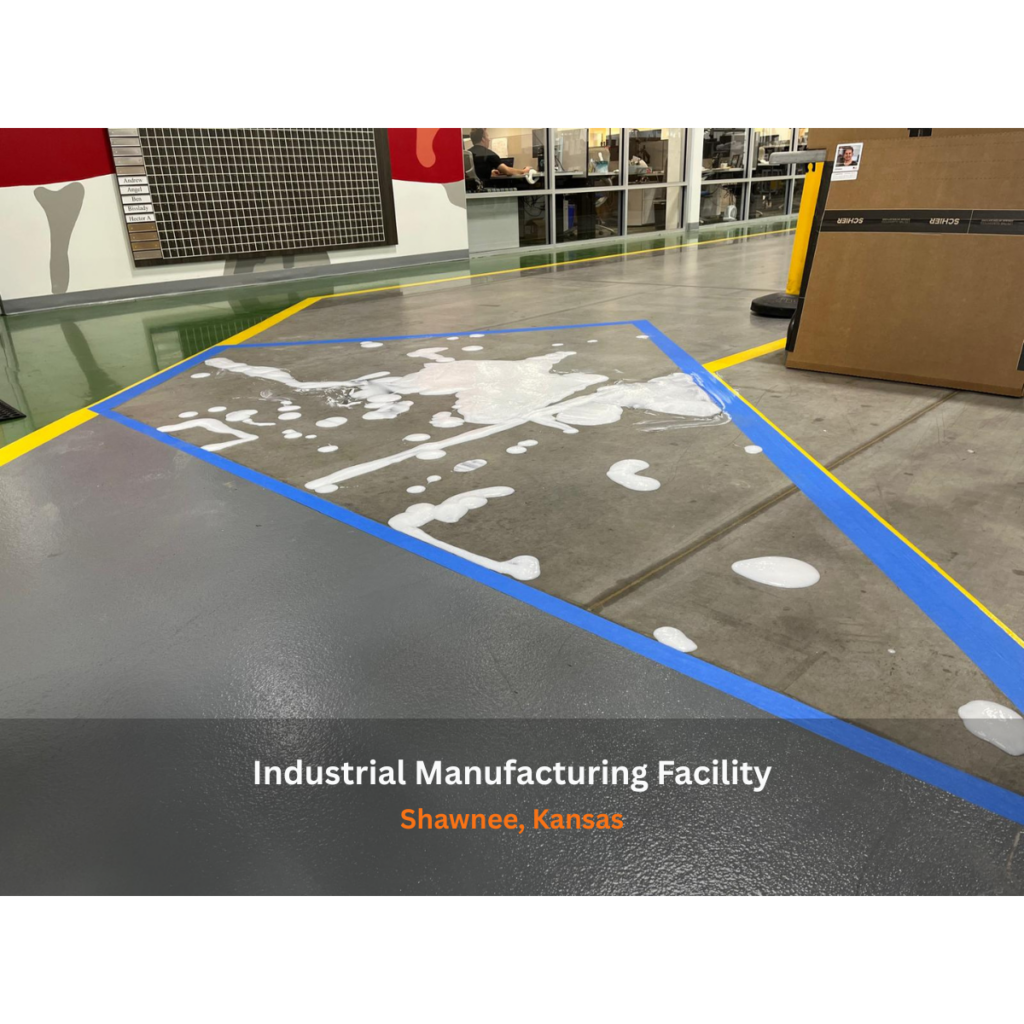
This is one of the leading causes of:
- Epoxy floor failure
- Coating delamination
- Peeling epoxy floors
- Bubbling floor coatings
- Adhesion problems
- Premature floor replacement
Before investing in a new floor system, it’s important to determine whether contamination exists beneath the surface.
Do You Have To Replace The Concrete?
Not necessarily.
Many Kansas City warehouses and manufacturing facilities assume that replacing the concrete is their only option.
In many cases, that is not true.
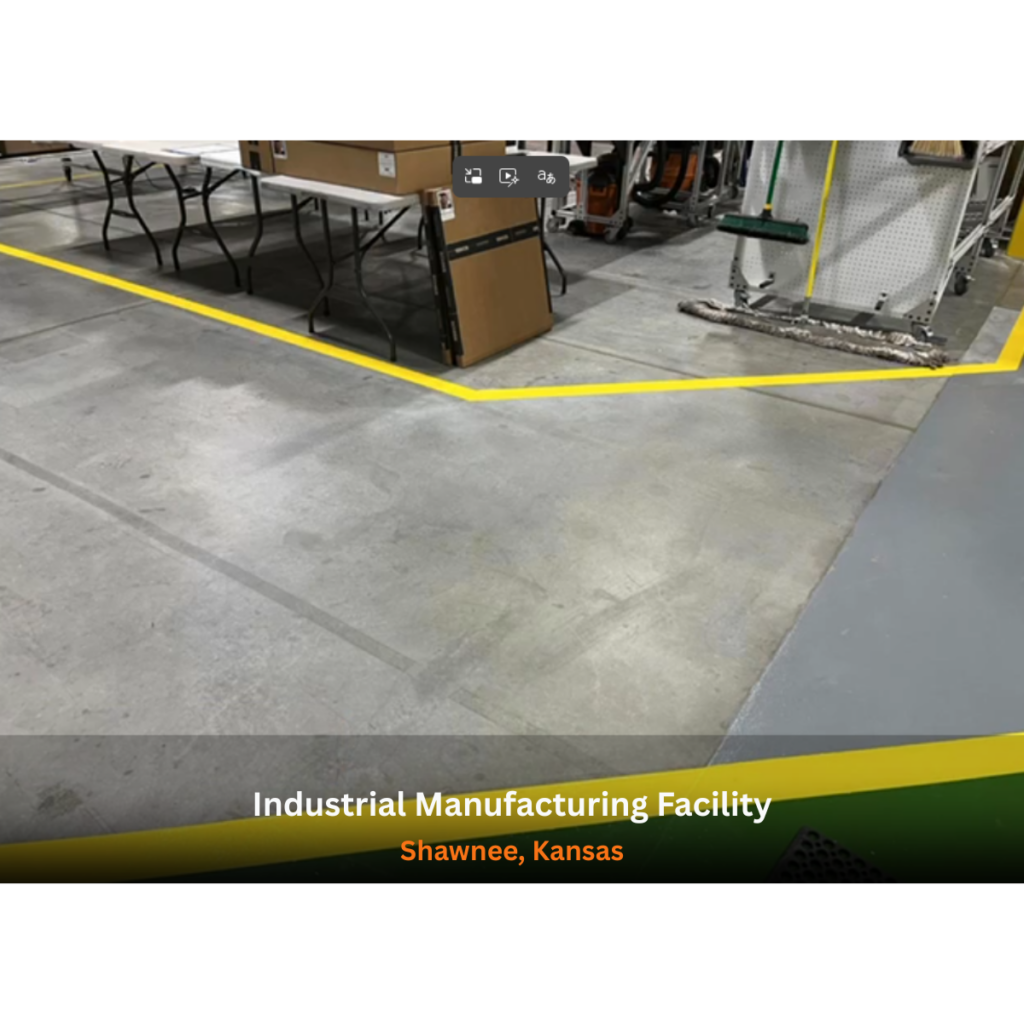
Depending on the condition of the slab, specialized oil-block systems can help address contamination issues and create a suitable surface for restoration.
This often allows facilities to avoid the cost, disruption, and downtime associated with concrete replacement.
Oil-Contaminated Concrete Restoration in Kansas City
At Advanced 360 Total Floor Care, we help industrial facilities evaluate and restore oil-contaminated concrete floors.
Our goal is to identify the root cause of the problem before recommending a solution.
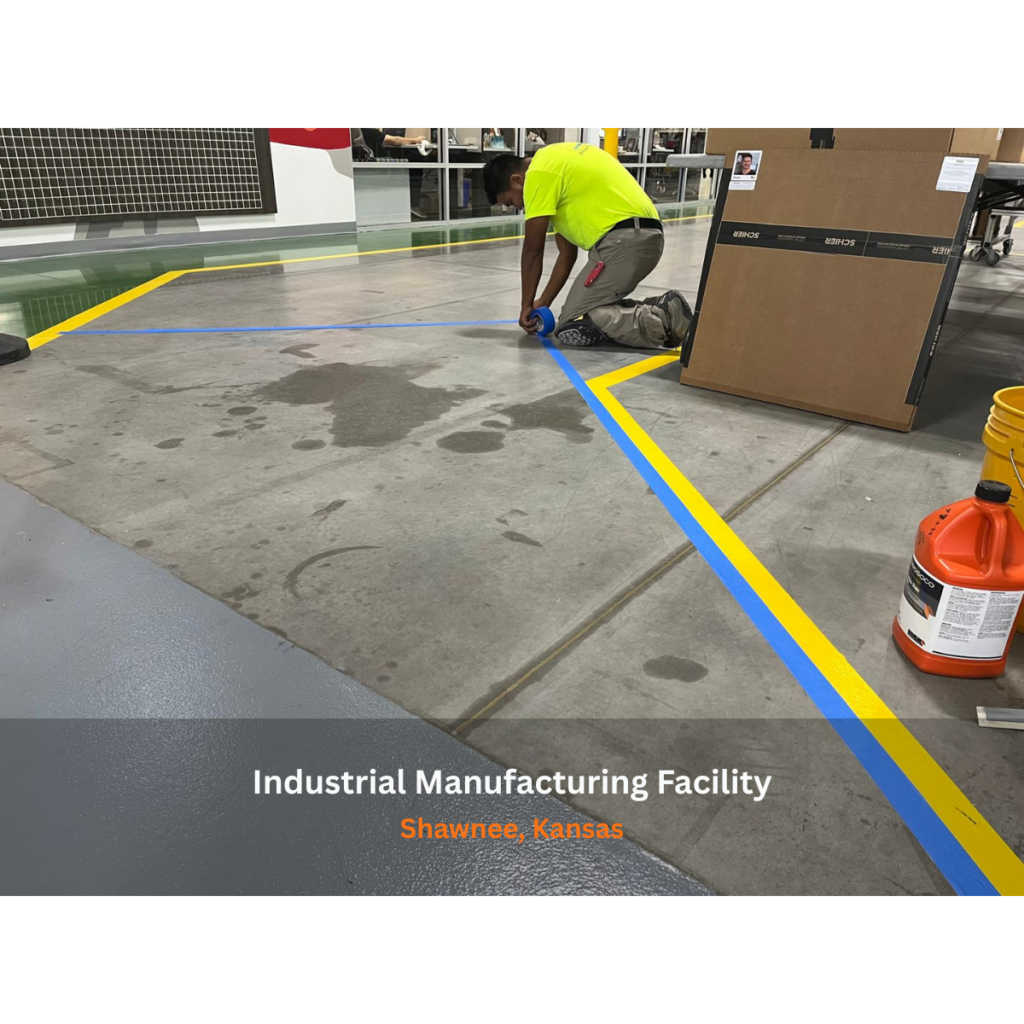
Every facility is different.
Every floor is different.
And every contamination issue requires proper evaluation.
Option #1: Industrial Epoxy Flooring
Once contamination issues have been properly addressed, many facilities choose industrial epoxy flooring.
Benefits include:
- Easier cleaning
- Improved appearance
- Better light reflectivity
- Increased durability
- Chemical resistance
- Improved safety
- Reduced concrete dusting
Warehouse epoxy flooring remains one of the most popular industrial floor solutions for Kansas City manufacturing plants and distribution centers.
Option #2: Polished Concrete Floors
Some facilities prefer polished concrete because there is no coating to peel or delaminate.
After contamination issues are addressed, polished concrete can provide:
- Low maintenance
- Long service life
- Improved appearance
- Better light reflectivity
- Reduced dust generation
Polished concrete is often a great solution for warehouses, logistics facilities, and industrial buildings.
Signs Your Concrete Floor May Be Oil Contaminated
You may need industrial concrete floor repair if you notice:
- Dark oil stains
- Grease-soaked concrete
- Previous coating failures
- Areas that never appear clean
- Hydraulic fluid leaks
- Dusting concrete
- Deteriorating floor surfaces
These warning signs often indicate deeper contamination beneath the surface.
Before You Install Epoxy, Know What’s Inside Your Concrete
One of the biggest mistakes facility managers make is choosing a floor system before understanding the condition of the concrete.
The right solution may be:
- Epoxy flooring
- Polished concrete
- Concrete restoration
- Moisture mitigation
- Partial concrete replacement
The only way to know is through proper evaluation.
Warehouse Floor Repair Experts in Kansas City
Advanced 360 Total Floor Care helps warehouses, manufacturing plants, food processing facilities, and distribution centers solve difficult industrial concrete floor problems.
If you have an oil-contaminated warehouse floor and you’re not sure what to do next, we can help evaluate the condition of the concrete and recommend the most practical solution.
➜ Explore Industrial Floor Coating Solutions in Kansas City designed for chemical exposure, heavy traffic and demanding facility conditions.
Looking For Industrial Concrete Floor Repair In Kansas City?
We provide warehouse floor repair, industrial epoxy flooring, polished concrete, concrete restoration, and industrial floor consulting throughout:
- Kansas City
- Overland Park
- Lenexa
- Olathe
- Shawnee
- Lawrence
- Topeka
- Surrounding Kansas and Missouri communities
Schedule a warehouse floor evaluation before investing in a floor system that may fail.
FAQ’s
Can oil-contaminated concrete be repaired without replacing the slab?
In many cases, yes. While every situation is different, specialized oil-block systems and concrete restoration methods can often address contamination without requiring complete concrete replacement. The best solution depends on the extent of the contamination and the condition of the existing slab.
Will epoxy flooring stick to oil-contaminated concrete?
Not if the contamination hasn’t been properly addressed. Oil that has penetrated deep into the concrete can prevent epoxy from bonding correctly, leading to peeling, bubbling, or delamination. A professional evaluation can determine whether the concrete requires additional preparation before a new flooring system is installed.
How do I know if my warehouse floor is contaminated with oil?
Common warning signs include dark oil stains, grease-soaked concrete, recurring coating failures, hydraulic fluid leaks, dusting concrete, and areas that never seem completely clean. If your facility has housed maintenance operations, equipment repair, or forklift service for many years, it’s worth having the concrete evaluated before investing in a new floor system.

Dana writes about commercial cleaning, healthcare environmental services, and professional floor care for Kansas City facilities. Through Advanced 360 Total Floor Care and Sani-SAFE Healthcare in Lenexa, Kansas, Dana shares real-world guidance on facility maintenance, infection prevention, floor preservation, inspection readiness, and creating cleaner, safer environments.