

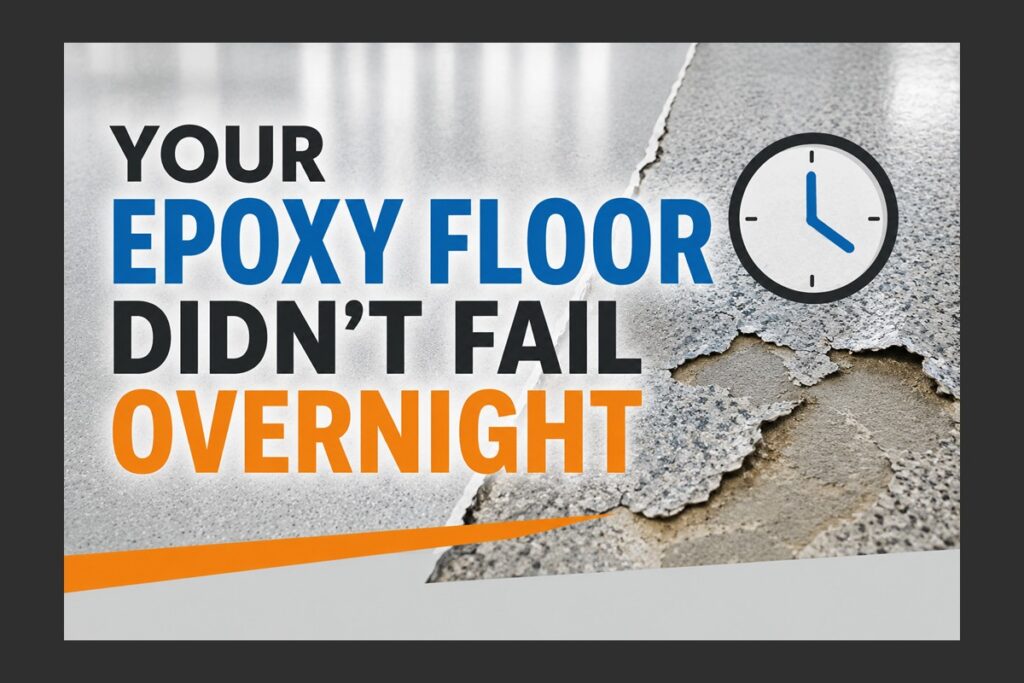
Your Epoxy Floor Didn’t Fail Overnight
Most epoxy floor failures don’t happen suddenly.
The peeling, bubbling, cracking, or delamination you’re seeing today likely started months – or even years – ago.
Unfortunately, by the time most facility managers notice a problem, the damage has already spread beneath the surface.
At Advanced 360 Total Floor Care, we’ve evaluated epoxy floor failures in manufacturing facilities throughout the Kansas City area. While every situation is different, most failures can be traced back to a handful of common causes.
Understanding these causes can help facility managers avoid expensive repairs, production disruptions, and safety concerns.
1. Improper Surface Preparation
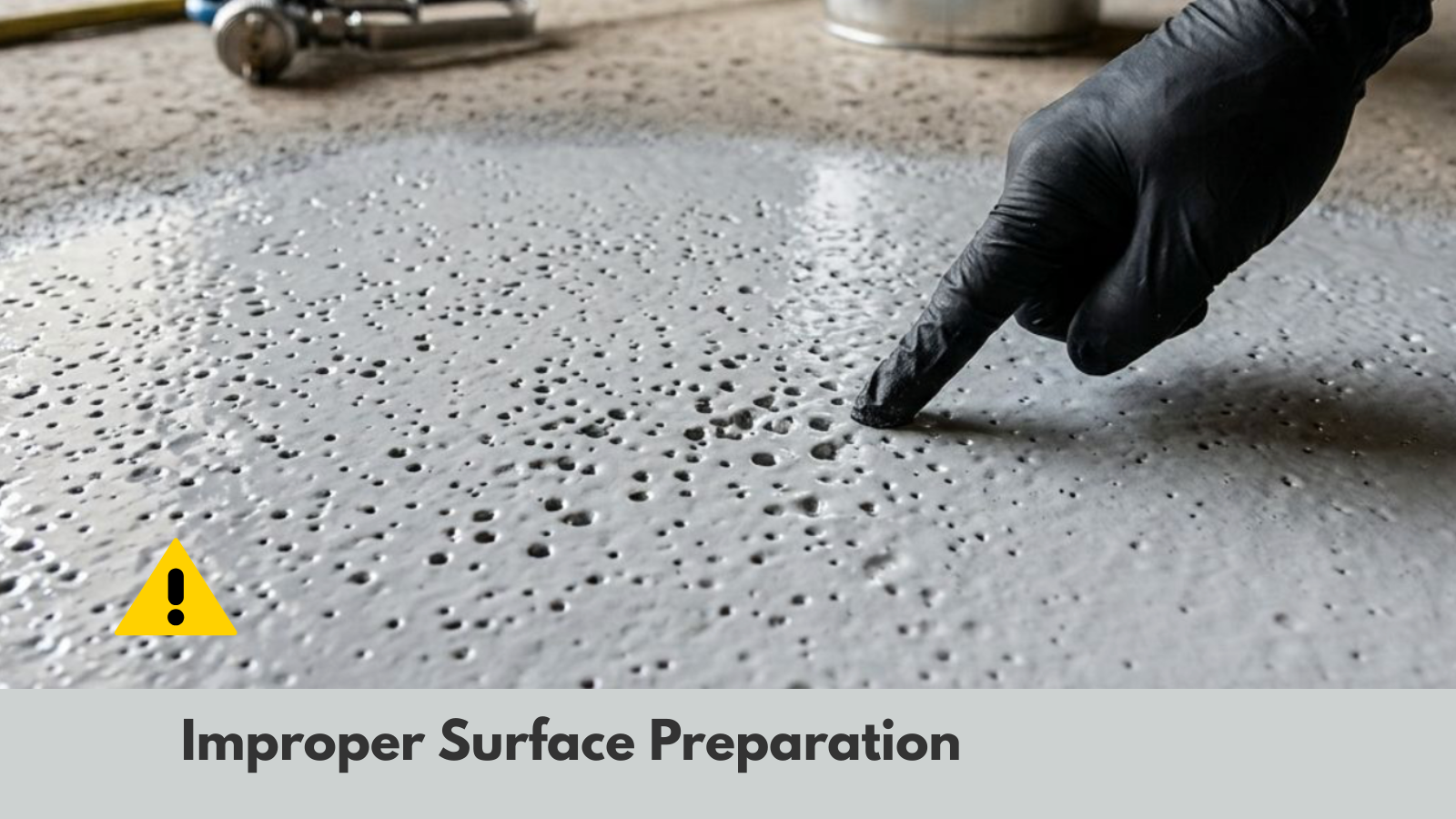
If there is one reason responsible for more epoxy failures than any other, it’s poor surface preparation.
Many people focus on the epoxy itself.
The real question should be: “What was the epoxy bonded to?”
The epoxy may never achieve a proper bond if the concrete surface contains:
- ⚠️ Dust
- ⚠️ Oil contamination
- ⚠️ Previous coatings
- ⚠️ Curing compounds
- ⚠️ Weak concrete
- ⚠️ Surface laitance
The result often appears as:
- 🔴 Peeling
- 🔴 Delamination
- 🔴 Flaking
- 🔴 Premature wear
Even the best epoxy system cannot overcome poor preparation.
2. Moisture Vapor Emissions
Kansas City experiences significant seasonal temperature and humidity fluctuations.
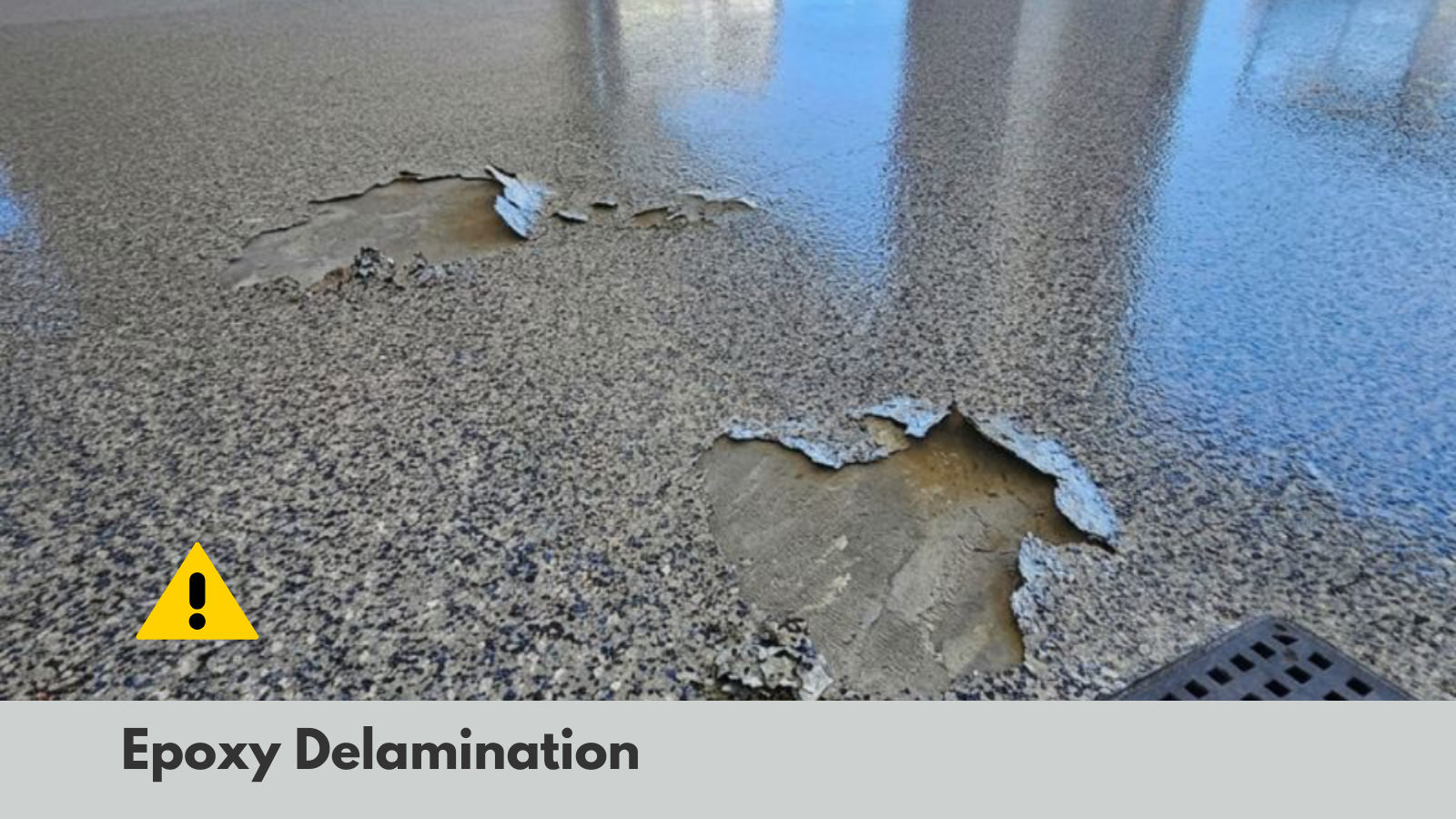
Many manufacturing facilities have concrete slabs that contain moisture long after construction is complete.
When moisture vapor rises through the slab and becomes trapped beneath the coating, it creates pressure.
This pressure can cause:
- ⚠️ Bubbling
- ⚠️ Blistering
- ⚠️ Peeling
- ⚠️ Adhesion failure
In many cases, the floor coating itself isn’t defective.
The moisture beneath it is the real problem.
This is why proper moisture testing should always be performed before installation.
3. The Wrong Epoxy System
Not all epoxy systems are created equal.
A coating designed for light warehouse traffic may fail quickly in a manufacturing environment exposed to:
✅ Forklift traffic
✅ Steel wheels
✅ Chemical exposure
✅ Hot water washdowns
✅ Thermal shock
✅ Heavy impacts
One of the most common mistakes we see is selecting a floor system based solely on price.
The cheapest system is often the most expensive one to replace.
4. Chemical Exposure
Manufacturing facilities frequently expose floors to substances that can damage traditional epoxy systems. Examples include:
- 🧪 Acids
- 🧴 Solvents
- 🛢️ Oils
- 🫧 Degreasers
- 🧼 Cleaning chemicals
- ⚗️ Process chemicals
Over time, chemical exposure can soften, discolor, stain, or degrade the coating.
In some environments, a Novolac epoxy or urethane cement system may provide better long-term performance.
5. Thermal Shock
Many Kansas City manufacturing plants experience dramatic temperature swings.
Examples include:
- ♨️ Hot water washdowns
- 💨 Steam cleaning
- ❄️ Freezer environments
- 🔥 Production heat
- 🚚 Outdoor loading areas
When the concrete and coating expand and contract at different rates, stress develops.
Eventually the bond may fail.
Thermal shock is particularly common in food processing and beverage facilities.
6. Impact and Traffic Damage
Manufacturing floors take a tremendous amount of abuse.
Every day they are subjected to:
- ❌ Forklifts
- ❌ Pallet jacks
- ❌ Heavy equipment
- ❌ Dropped tools
- ❌ Steel carts
- ❌ Production traffic
Over time these impacts can create:
- ⚠️ Cracks
- ⚠️ Chips
- ⚠️ Surface wear
- ⚠️ Coating breakdown
Not every floor failure begins with a bonding problem.
Some failures simply result from years of mechanical abuse.
7. Concrete Movement and Cracking
Concrete naturally moves.
It shrinks, expands, and responds to environmental conditions.
When cracks develop beneath an epoxy coating, the movement often transfers through the surface.
Facility managers may notice:
- ❌ Reflective cracking
- ❌ Delamination along cracks
- ❌ Joint failure
- ❌ Surface fractures
In many situations, the coating is reacting to movement within the slab itself.
8. Poor Installation Practices
Sometimes the problem isn’t the product.
It’s the installation process.
Common issues include:
- ❌ Incorrect mixing ratios
- ❌ Improper cure times
- ❌ Applying coatings too thin
- ❌ Applying coatings too thick
- ❌ Installing outside temperature requirements
- ❌ Rushing production schedules
These mistakes may not become visible immediately.
Months later, however, failures begin appearing throughout the floor.
Warning Signs of Epoxy Floor Failure
If you notice any of the following, your floor may require evaluation:
🟥 Peeling
🟥 Bubbling
🟥 Cracking
🟥 Delamination
🟥 Discoloration
🟥 Soft spots
🟥 Tire marks
🟥 Surface wear
🟥 Concrete exposure
🟥 Moisture-related blistering
Addressing these issues early can significantly reduce repair costs.
Can Epoxy Floor Failure Be Prevented?
In many cases, yes.
Successful epoxy installations typically include:
- ✅ Proper moisture testing
- ✅ Thorough surface preparation
- ✅ Correct system selection
- ✅ Quality installation practices
- ✅ Appropriate maintenance
- ✅ Ongoing inspections
When these steps are followed, industrial floor systems can provide years of reliable performance.
Final Thoughts
Most epoxy floor failures are not caused by a defective product.
They’re caused by a combination of environmental conditions, improper preparation, moisture issues, traffic demands, and installation mistakes.
The good news is that most failures leave warning signs before major problems develop.
The earlier those signs are identified, the more options facility managers have.
And often, the less expensive the repair becomes.
About Advanced 360 Total Floor Care
Advanced 360 Total Floor Care specializes in industrial epoxy floor systems, moisture mitigation, concrete repairs, joint filler replacement, safety striping, and manufacturing facility flooring throughout the Kansas City area.
➜ Explore Industrial Floor Care Solutions in Kansas City designed for chemical exposure, heavy traffic, and demanding facility conditions.
If you’re experiencing peeling, bubbling, cracking, or failing epoxy floors, request a complimentary Epoxy Failure Health Check and identify the root cause before the problem spreads.
FAQs
How long should an industrial epoxy floor last?
A properly installed and maintained industrial epoxy floor can last 10–20 years or more, depending on traffic, chemical exposure, maintenance practices, and the type of epoxy system used. Premature failures are often caused by poor surface preparation, moisture vapor issues, or selecting the wrong coating for the environment rather than the age of the floor.
Can a peeling or damaged epoxy floor be repaired, or does it need to be replaced?
It depends on the cause of the failure. Small, isolated areas may be repaired if the surrounding coating is still properly bonded. However, widespread peeling, bubbling, or delamination often indicates an underlying issue—such as moisture, contamination, or improper installation—that should be corrected before new coatings are applied. A professional evaluation can determine the most cost-effective solution.
What causes epoxy floors to peel or bubble?
The most common causes include inadequate surface preparation, moisture vapor rising through the concrete, improper installation, heavy impact, chemical exposure, and choosing an epoxy system that isn’t designed for the facility’s operating conditions. Identifying the root cause is essential before making repairs, or the same problems may return.

Dana writes about commercial cleaning, healthcare environmental services, and professional floor care for Kansas City facilities. Through Advanced 360 Total Floor Care and Sani-SAFE Healthcare in Lenexa, Kansas, Dana shares real-world guidance on facility maintenance, infection prevention, floor preservation, inspection readiness, and creating cleaner, safer environments.