

Looking for the Best Floor Coating for an Industrial Battery Charging Station in Kansas City?
(Video Transcript Below)
If you manage a warehouse, manufacturing plant, distribution center, maintenance facility, or industrial operation in Kansas City, your battery charging area may be one of the harshest environments in your building.
Whether you’re charging electric forklifts, pallet jacks, floor scrubbers, aerial lifts, or other battery-powered equipment, these areas are exposed to chemicals that can quickly destroy conventional floor coatings – and eventually the concrete underneath.
At first, the floor may look fine.
Then the warning signs begin to appear:
❌ Peeling epoxy
❌ Bubbling floor coatings
❌ Acid stains
❌ Soft concrete
❌ Surface pitting
❌ Spalling concrete
❌ Uneven floors
❌ Recurring repairs
Many facility managers assume the coating simply needs to be replaced.
In many cases, the real issue is that the original flooring system was never designed for battery acid exposure.
Why Battery Charging Areas Are So Hard on Concrete Floors
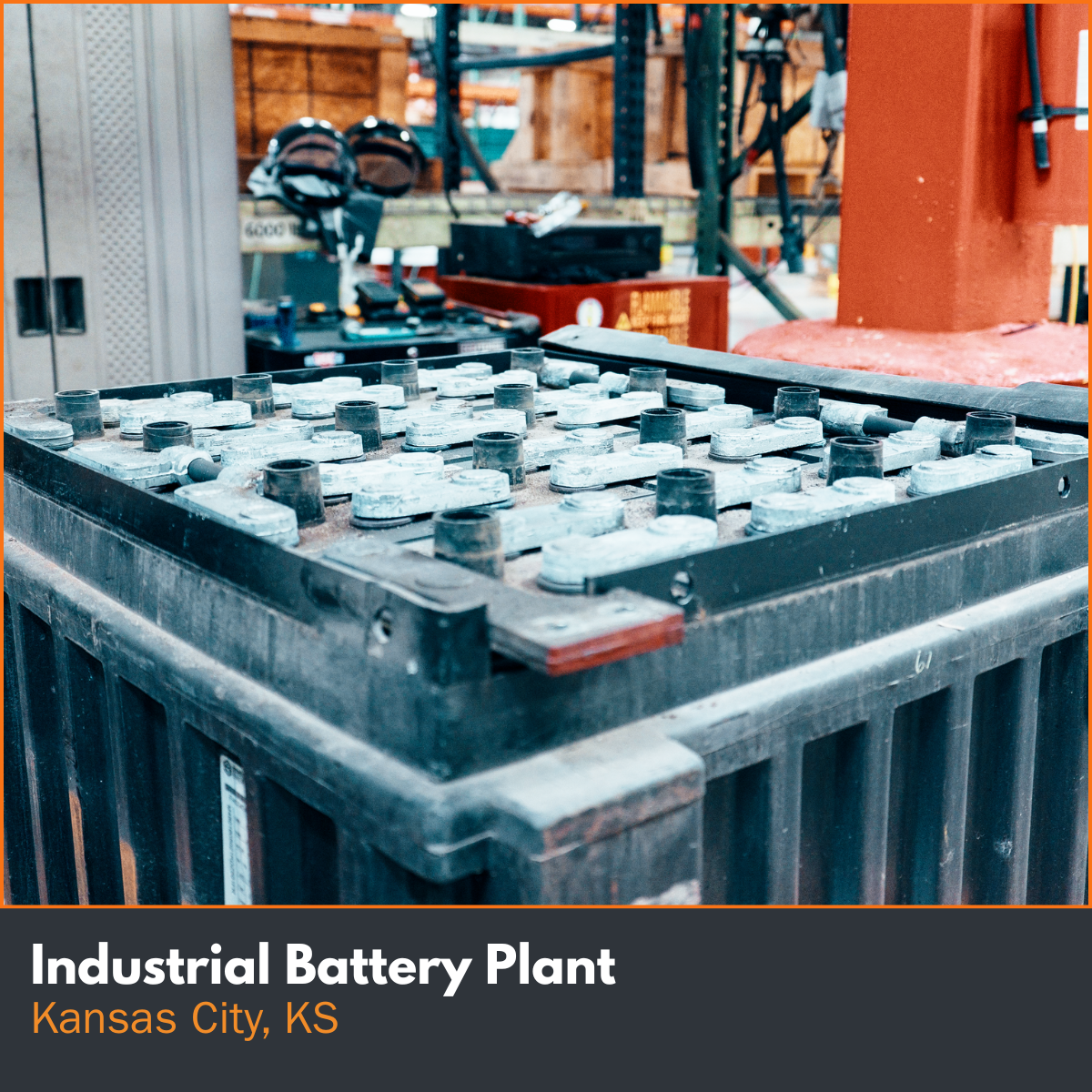
Battery charging areas create one of the most chemically aggressive environments inside an industrial facility.
Unlike standard production or warehouse floors, these spaces are routinely exposed to:
❌ Sulfuric acid
❌ Battery electrolyte spills
❌ Water used during battery maintenance
❌ Corrosive cleaning chemicals
❌ Heavy equipment traffic
❌ Battery changing equipment
❌ Frequent cleaning and washdowns
This combination of chemical exposure, moisture, and constant traffic creates conditions that many standard floor coatings simply weren’t designed to handle.
A floor system that performs well throughout the rest of your facility may fail quickly in the battery charging area.
Why Standard Epoxy Often Fails
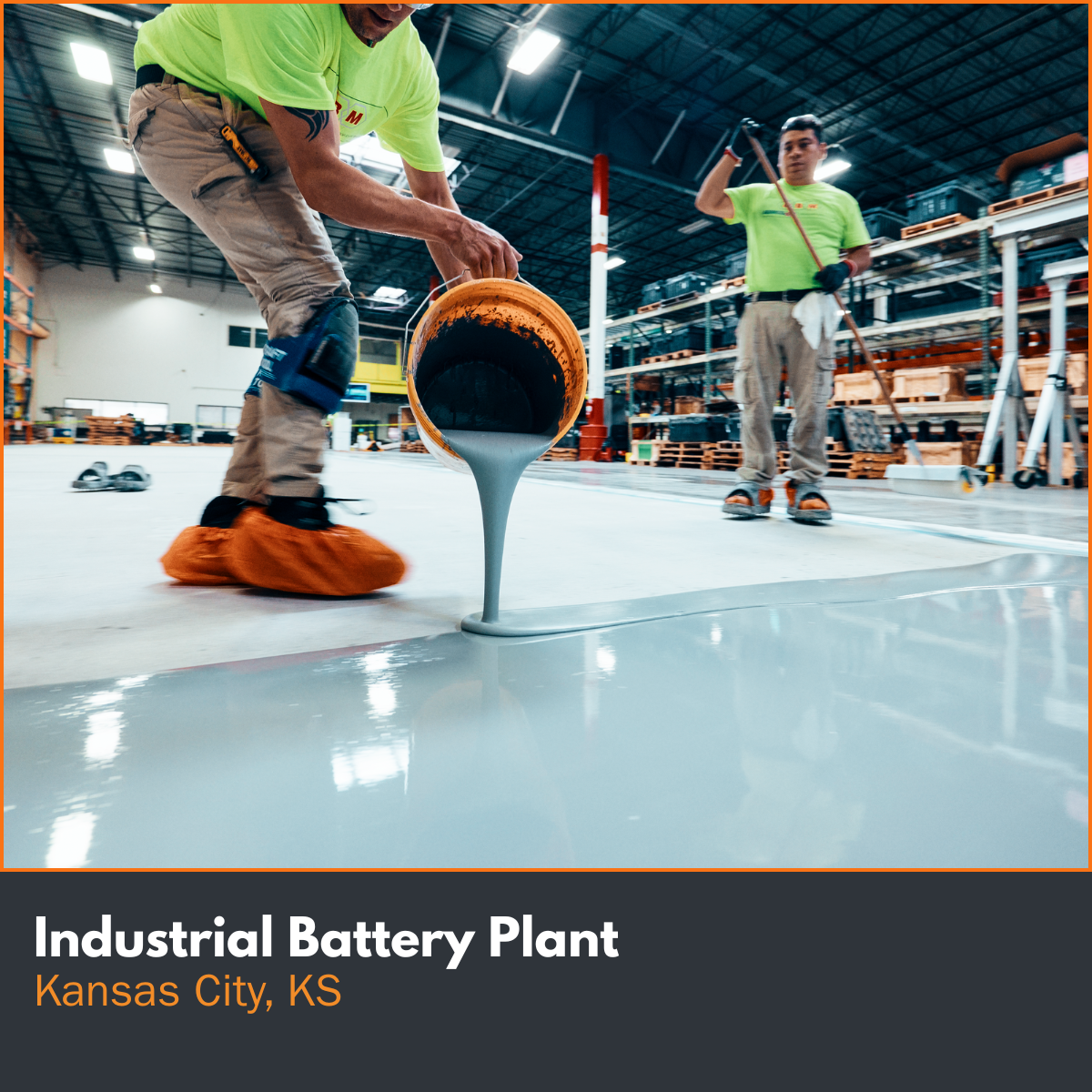
Traditional epoxy flooring performs well in many industrial environments.
Battery charging stations are different.
Repeated exposure to sulfuric acid can gradually attack coatings that aren’t formulated for aggressive chemical resistance.
Common Signs Include:
🟧 Peeling Epoxy
- The coating begins separating from the concrete.
🫧 Bubbling and Blistering
- Chemical attack weakens the flooring system.
⬇️ Surface Softening
- The coating loses its protective qualities.
🧪 Acid Staining
- Visible damage develops around charging and maintenance areas.
💰 Repeated & Recurring Repair Costs
The same locations continue failing year after year.
In many cases, the installation isn’t the problem.
The flooring system simply wasn’t designed for long-term exposure to battery acid.
What Happens When Chemicals Reach Concrete?
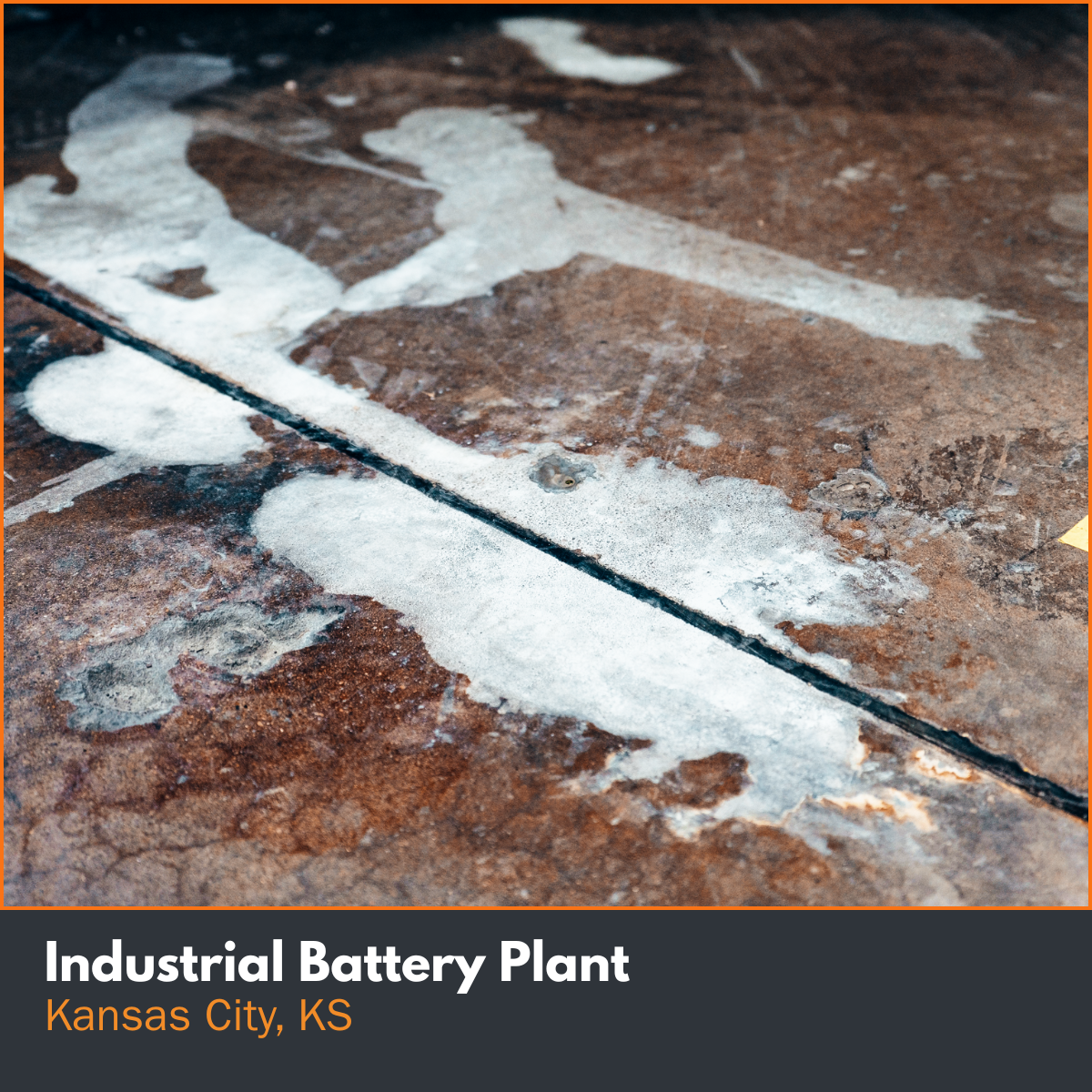
This is where a flooring problem becomes a much larger facility problem.
Most people think floor coatings exist simply to improve appearance.
Their real purpose is protecting the concrete underneath.
Concrete is naturally porous.
When acids, solvents, degreasers, or other aggressive chemicals penetrate a damaged floor system, they can begin breaking down the concrete itself.
Over time, chemical exposure may lead to:
❌ Surface erosion
❌ Pitting
❌ Spalling
❌ Dusting concrete
❌ Soft concrete
❌ Cracked surfaces
❌ Uneven flooring
❌ Trip hazards
As the deterioration continues, the area may become increasingly unsafe for:
❌ Forklift traffic
❌ Battery changing equipment
❌ Maintenance personnel
❌ Pedestrian traffic
What started as a coating failure can quickly become a concrete restoration project.
Why This Becomes a Safety Issue
Many facility managers focus first on how the floor looks.
The larger concern is safety.
⚠️ When chemicals damage concrete, surfaces become rough and uneven.
⚠️ Forklifts, pallet jacks, carts, and other equipment become more difficult to operate safely on uneven surfaces.
⚠️ Employees encounter trip hazards.
⚠️ Damaged concrete can also create dusting problems that affect housekeeping, product quality, and overall facility appearance.
In severe cases, deteriorated concrete may require removal and reconstruction before a new flooring system can be installed.
Signs Your Industrial Floor Needs Attention
Watch for these ⚠️warning signs⚠️
🔴 Peeling epoxy
🔴 Bubbling coatings
🔴 Acid stains
🔴 Soft concrete
🔴 Surface pitting
🔴 Spalling concrete
🔴 Concrete dusting
🔴 Cracks
🔴 Uneven flooring
🔴 Recurring repairs
🔴 Exposed concrete
The earlier these issues are identified, the less expensive repairs tend to be.
⭐The Best Chemical-Resistant Industrial Floor Coatings ⭐
Not all industrial floor coatings offer the same level of protection.
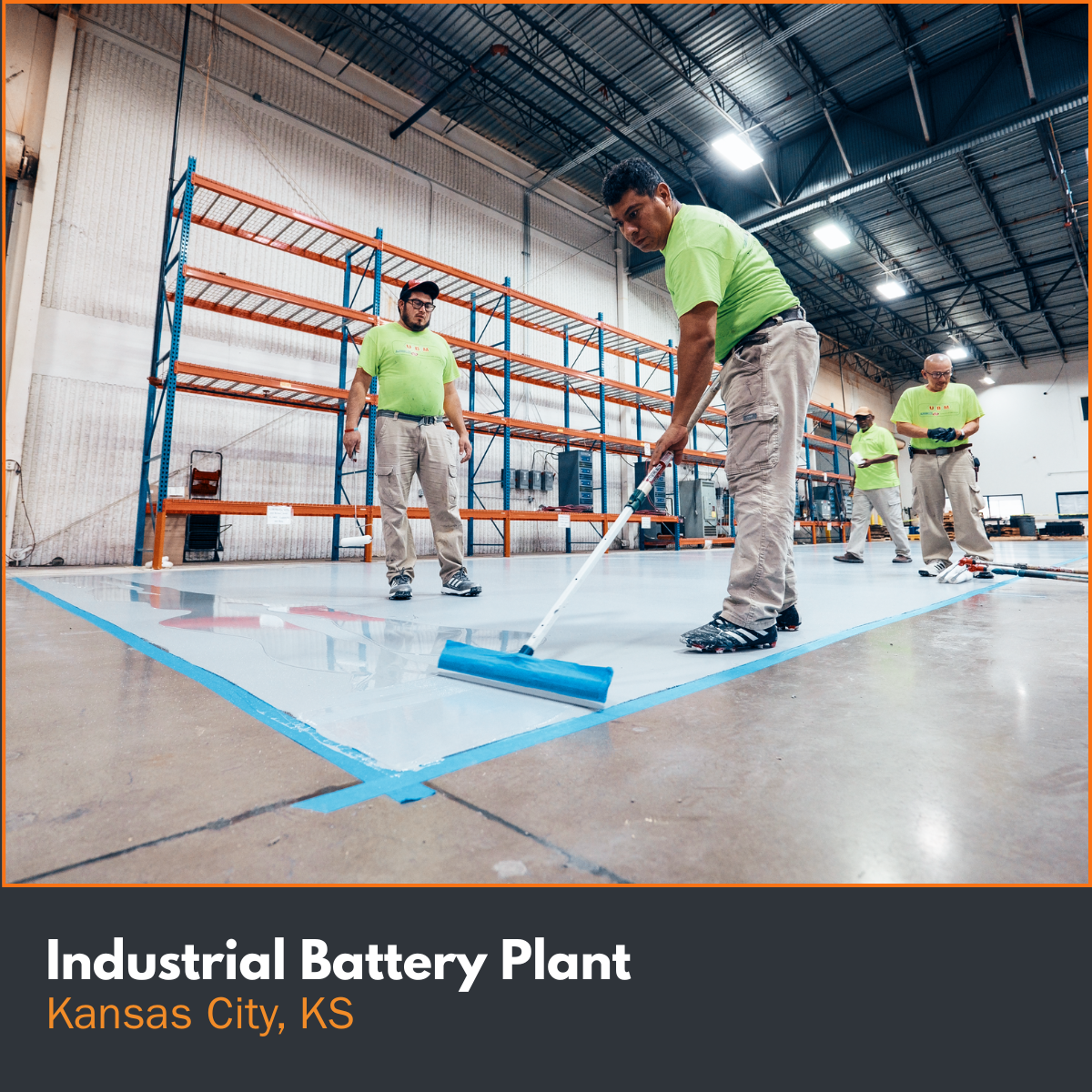
Facilities exposed to sulfuric acid often require specialized systems designed for chemical resistance.
✅ Novolac Epoxy Flooring
Novolac epoxy systems provide significantly greater resistance to acids and aggressive chemicals than many traditional epoxy systems.
Benefits include:
- Excellent acid resistance
- Chemical protection
- Long-term durability
- Protection of the concrete substrate
✅ Urethane Cement Flooring
For facilities exposed to both chemical attack and heavy traffic, urethane cement systems are often one of the most durable solutions available.
Benefits include:
- Chemical resistance
- Impact resistance
- Thermal shock resistance
- Heavy-duty industrial performance
✅ Secondary Containment Systems
In some environments, additional containment measures may be recommended to help control accidental spills and protect surrounding floor areas.
Why Choosing the Right System Matters
Many facility managers compare flooring systems based on initial cost.
The better question is: “What will it cost if battery acid reaches the concrete?”
A properly designed battery charging station floor can help:
➜ Prevent concrete deterioration
➜ Improve employee safety
➜ Reduce repair costs
➜ Extend floor life
➜ Minimize downtime
➜ Protect facility assets
The goal isn’t simply to install a floor coating.
The goal is to protect the concrete slab for years to come.
Industrial Floor Coating Contractor in Kansas City
Every industrial facility has different flooring challenges.
Whether you’re dealing with chemical exposure, peeling epoxy, deteriorating concrete, recurring floor failures, or specialized environments like forklift battery charging stations, selecting the right flooring system is essential.
Addressing problems early can help improve safety, extend floor life, reduce maintenance costs, and protect your investment for years to come.
FAQs
What chemicals can damage industrial concrete floors?
- Acids, battery electrolyte, solvents, degreasers, food processing chemicals, cleaning products, and many industrial process chemicals can damage concrete if the floor is not properly protected.
Is standard epoxy chemical resistant?
- Standard epoxy performs well in many environments, but facilities with aggressive chemical exposure often require higher-performance systems such as Novolac epoxy or urethane cement.
How do I know which floor coating is right for my facility?
- The best flooring system depends on the chemicals being used, traffic levels, operating temperatures, cleaning procedures, and the condition of the existing concrete. A professional floor assessment can help determine the most appropriate long-term solution.
Can battery acid permanently damage concrete?
- Yes. Battery acid can chemically attack concrete over time, causing surface erosion, pitting, spalling, and weakening of the slab. Once the concrete is damaged, repairs often involve more than simply replacing the floor coating.
About Advanced 360 Total Floor Care
➜ Explore Industrial Floor Coating Solutions designed for chemical exposure, heavy traffic, and demanding facility conditions.
Advanced 360 Total Floor Care specializes in industrial floor coatings, chemical-resistant flooring, Novolac epoxy systems, urethane cement flooring, warehouse concrete repair, joint repair, concrete restoration, and industrial flooring solutions throughout Kansas City and the surrounding areas.
If you’re experiencing peeling epoxy, chemical damage, deteriorating concrete, or recurring floor failures, schedule a complimentary Industrial Floor Assessment and learn how to protect your concrete before minor damage becomes a major restoration project.
(Video Transcript)
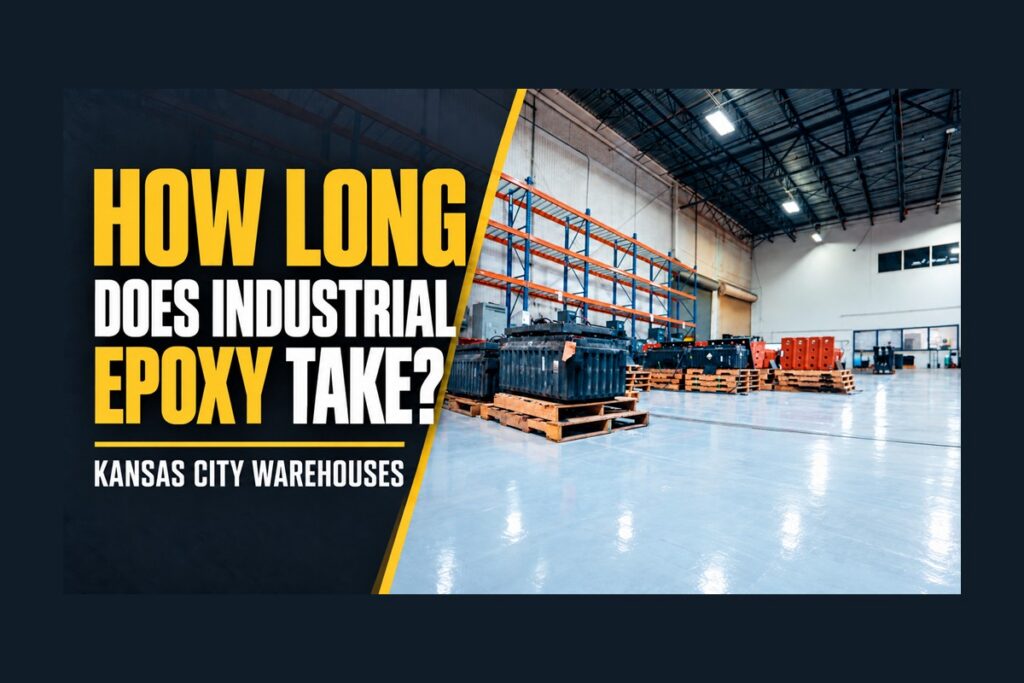
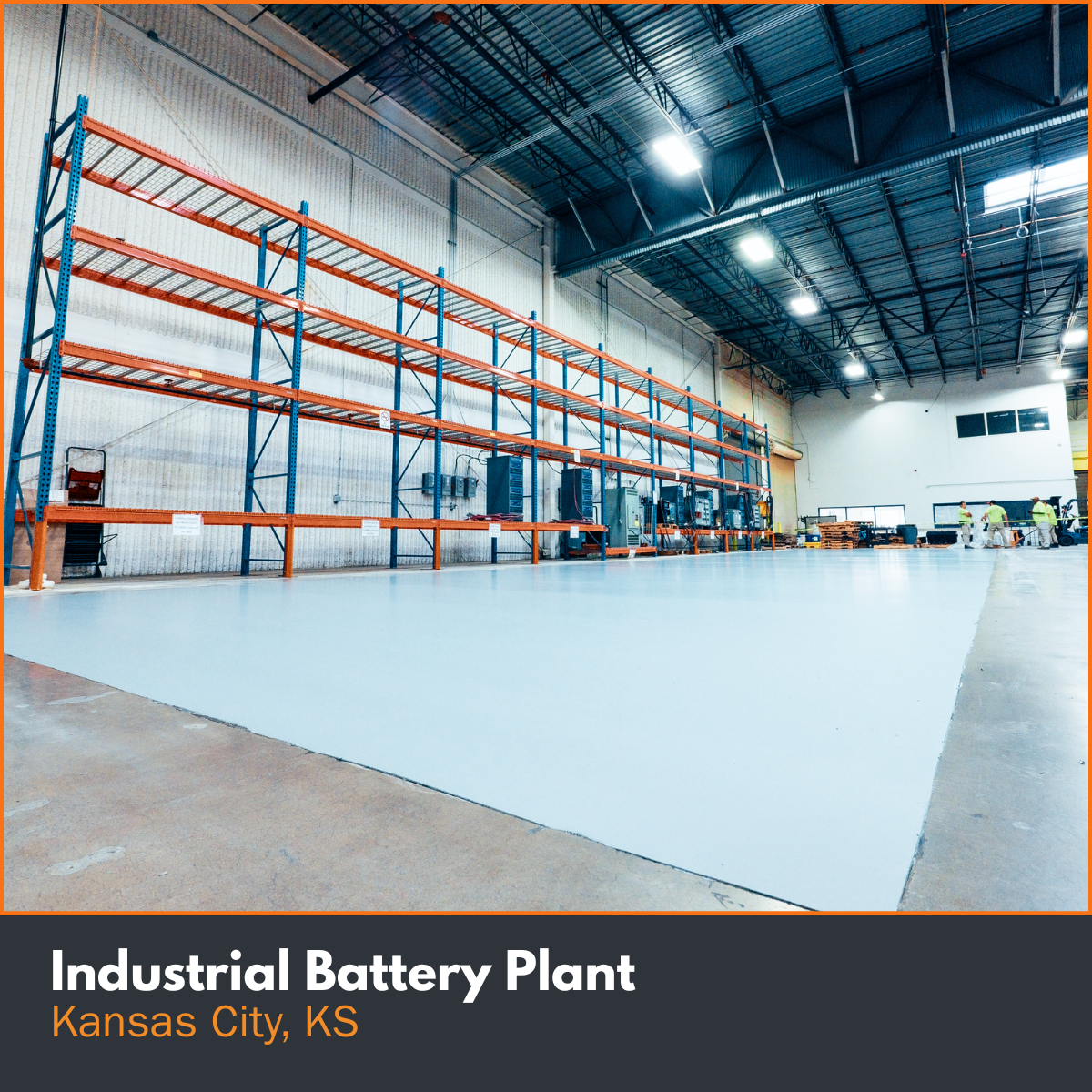
We are working inside a manufacturing plant for uh locomotive batteries. They station them right here and they test them before they go to the market. Here is the locomotive battery that they manufacture over here. Sometimes they get very heated and then the acid starts boiling and overflowing and then it spills on the concrete floor.
So, if you don’t have the proper coating that chemical most likely is going to attack the concrete floor. We’re going to apply our urethane cement and then after that we’re going to topcoat it with a noble epoxy which is made for this type of environment. It can handle harsh chemicals. Part of the project we are going to remove the old joint filler.
There are so many spots that the joint filler has been deteriorated. We’ve got control joints and also, we have an expansion joint. You have got to treat them differently. Not all uh concrete joints are equal. So, we’ll treat them properly.
We remove the deteriorated coating. We went ahead and did some repairs and also we ground the entire substrate the concrete and also use a shot blasting just to remove any fine dust. If you notice, there were a lot of holes underneath that old coating. We filled them with a product fast cure and then we ground them down flush with the floor. This product is compatible with the urethan cement that we’re going to use so we have good bonding.
Pablo is getting ready to remove the existing joint filler. The joint filler in some areas is already gone and also they have the wrong type of joint filler. For us to guarantee this job and make sure that we have a long-lasting product, we need to remove everything and start from scratch. And then we have confidence that we did it properly. I do not want to build on something that might not have an integrity to be a lifetime floor. All right. Go ahead.
Hector is using the Metabo making a very fine line at the edge of the slab. We do that intentionally. We want to anchor and key in our product so that will help prevent any lifting on the future.
After you grind and shop blast or vacuum the surface, we wear booties because we do not want to contaminate the surface. The surface is very rough right now almost like a sand paper. That’s why we wear the boots – to prevent any marking or anything that can lead to uh breaking the adhesion of the coating when we apply. Doing a professional job, you have to be neat. When you work in the area, you have to respect the property. Setting up your mixing station to prevent any leakage or any stains. Using proper protection before you apply, it helps a lot. You could be lazy and don’t do anything at the beginning and be messy and you will spend a lot of time cleaning up when you get done.
It’s very humid and it’s very hot inside this warehouse. When you apply industrial coating, epoxies and urethan cement, you need to watch the temperature of the surface and the due point and the air temperature as well. The surface temperature is 80, which is really good and I’m hoping that it does not increase. Another thing also we do, we keep the product in a very cool area, and we keep checking the temperature of the product, the liquid and the filler. When the batteries are overflowing, the acid sometimes more slippery than regular water. This is um aluminum oxide. We’re going to add to the top coat to give it a little bit of traction. This is just an extra step to make sure that the floor is safe. Pablo went ahead and pre-measured the aluminum oxide. So, we make sure that we have the same amount in every mix. We don’t want to have variation. If you notice, we have this device here. We hook it to a vacuum to prevent the dust going up in the air. It’s not good for our people and it’s not good for the environment. So, that’s one of the best practices we use.
Finally, we were able to put the topcoat, the Nova Act epoxy. Great product. Has a lot of chemical resistance. It’s really good for this type of environment. We’re going to come back, remove the tape, cut the joints, and fill them, and turn over the floor to the customer to use. We finished putting the product down. Now the last step is cutting the joints and refilling them with the proper material. That’s what we call honoring the joints. We fill them with products during the process of the installation.
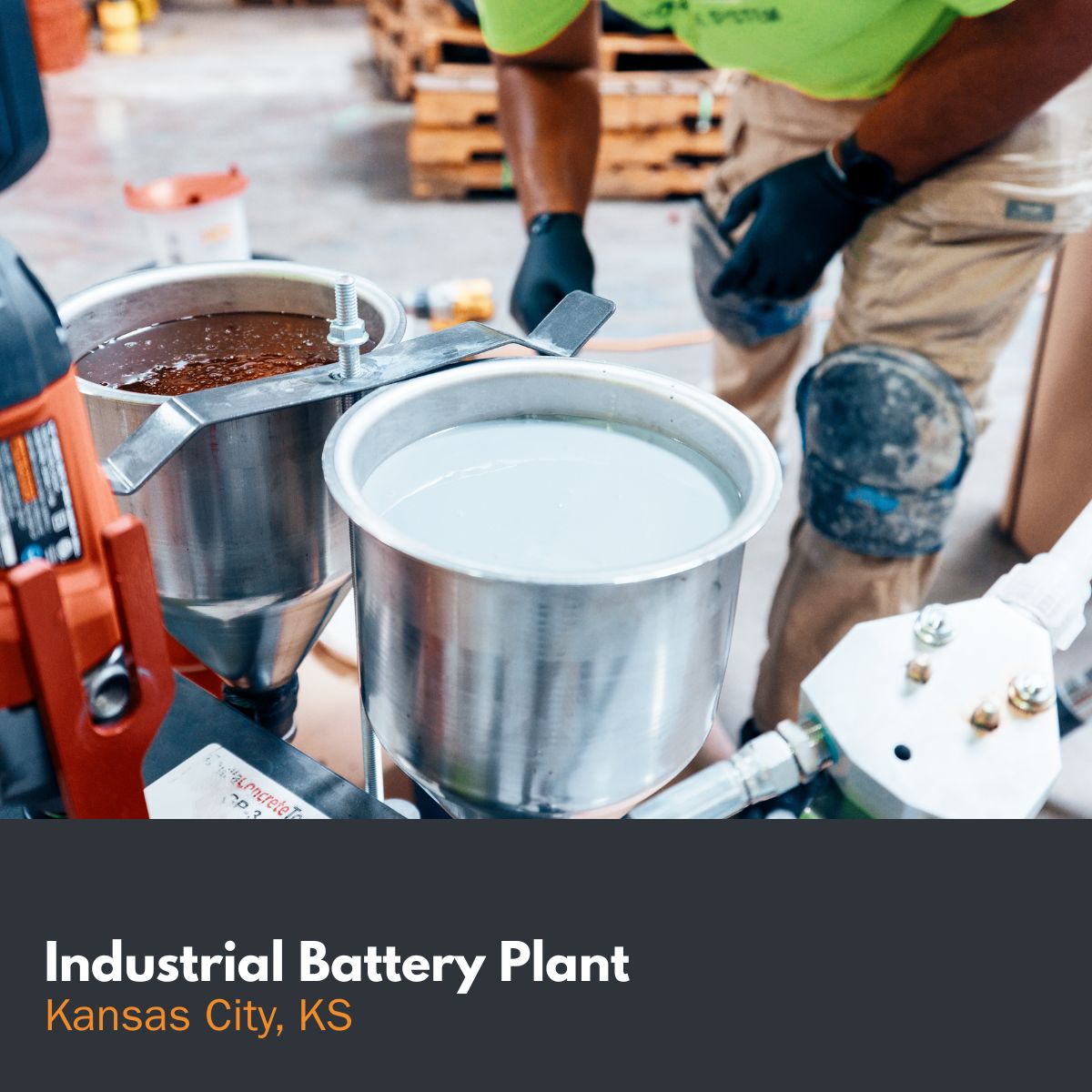
Now Pablo went ahead with the saw. He cut the joints again and next step will be filling them up with the proper material. Is a product that has a lot of chemical resistance. Since we have a small job like this, we’re going to use our small pump. The advantage of this pump mixes the chemical for you automatically. We have the base and then we have the hardener and then we use the static mixer which pulls the two chemicals equally one to one mixes them and then dispense them through this static mixer into the joint. This will prevent guessing or mixing the product improperly. One to one the machine will do the work for you automatically. This is the base. It has the pigment and the pigment fell down the bottom. You need to mix for about a few minutes so you can suspend all the color before you start pumping the product. As the best practice, we always do a couple of shots to make sure that we have product that mixed properly before we dispense it into the joint.
Okay, I’m back. We finished with the project. We removed the deteriorated epoxy. We ground, shop blasted, primed, and we installed the urethan cement. And then we topcoat the floor with a novel act which is made for this type of environment. I’m very pleased and happy with the way the floor turned out. It’s really good and this is a lifetime floor is going to be easy to clean and maintain and also it has all the protection they need.
I’m here with Steven. Um he’s the manager of the plant. Stephen, tell me a little bit about your floor. What issues and problems you had.
Uh beforehand with the acid getting on the floor was eating up the concrete. Um, now with this new flooring, that should be all taken care of.
Do you like your new floor?
Floor is great. Floor was looks really great. Really good job.
How do you feel about UBM Advanced 360?
Did a great job. Didn’t have to I wasn’t even on site for the majority of the project. Guys did a wonderful job. Didn’t have to be here to oversee it. It’s great. Great quality.
So, you didn’t have to babysit us at all?
Not at all.
Okay. Would you deliver what we promised here?
Absolutely.
Okay. Would you recommend us for your friends?
I would.
All right. Thank you. Thank you.
Appreciate you. Thank you.

Dana writes about commercial cleaning, healthcare environmental services, and professional floor care for Kansas City facilities. Through Advanced 360 Total Floor Care and Sani-SAFE Healthcare in Lenexa, Kansas, Dana shares real-world guidance on facility maintenance, infection prevention, floor preservation, inspection readiness, and creating cleaner, safer environments.