

Travertine is one of the most beautiful natural stone flooring materials available.
Its warm colors and timeless appearance make it popular in office buildings, hotels, churches, healthcare facilities, country clubs, commercial entrances, and high-end properties throughout the Kansas City area.
Unfortunately, travertine doesn’t stay beautiful forever.
Years of foot traffic, improper cleaning, and normal wear can leave the surface looking worn, scratched, dull, cracked, or full of holes.
Many property owners assume replacement is the only option.
In many cases, professional restoration can make the floor look dramatically better and at a fraction of the cost of replacing it.
Common Signs Your Travertine Needs Restoration
❌ Dull finish
❌ Heavy scratches
❌ Etching from acidic cleaners
❌ Cracked tiles
❌ Chipped edges
❌ Missing filler
❌ Holes or pits collecting dirt
❌ Uneven shine
❌Embedded soil that won’t clean out
The longer these issues are ignored, the more difficult they often become to repair. And the more expensive project becomes.
What Is Travertine?
Travertine is a natural limestone formed over thousands of years by mineral-rich hot springs and underground water deposits.
As minerals build up layer by layer, small gas bubbles become trapped inside the stone. When those gases escape, they leave behind the tiny holes and voids that make travertine instantly recognizable.
Unlike manufactured flooring materials, no two pieces of travertine are exactly alike.
Its natural movement, earthy colors, and unique surface make it one of the most popular natural stones for commercial buildings, hotels, churches, healthcare facilities, and upscale residential properties.
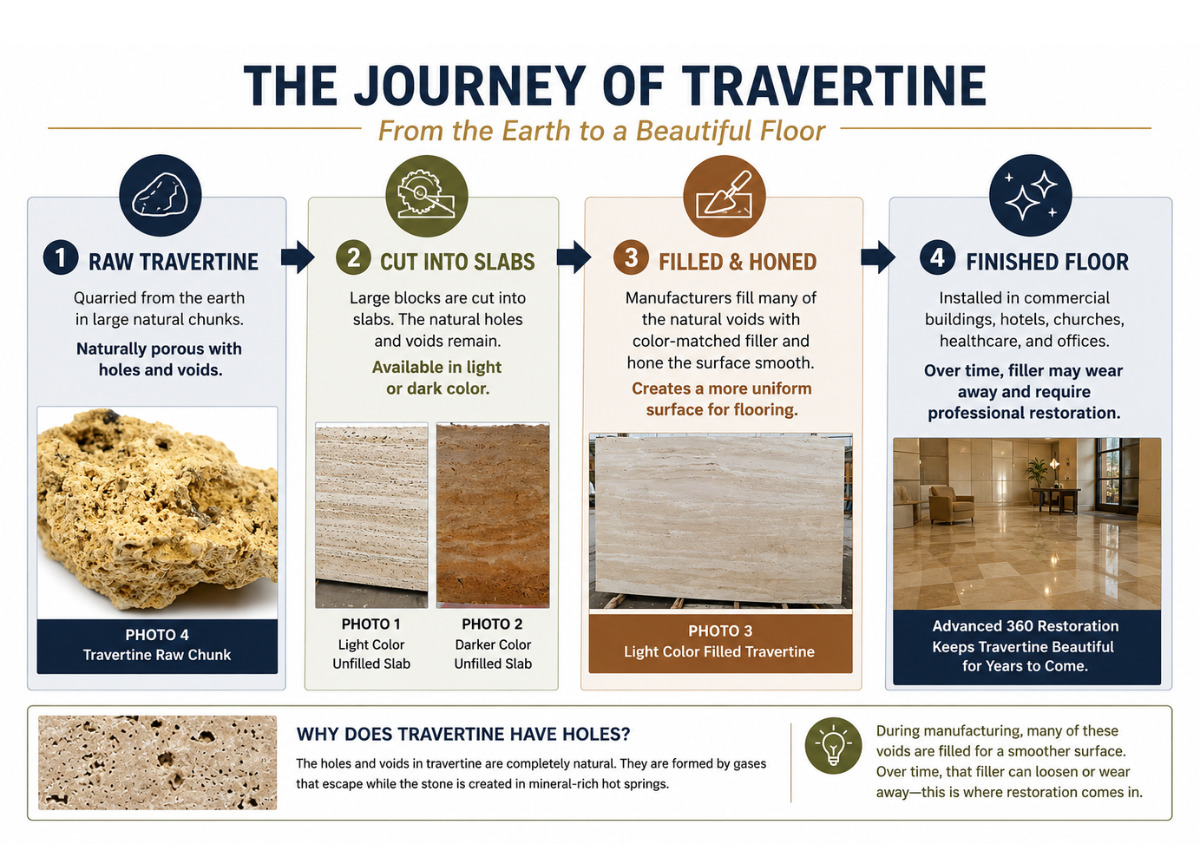
Here’s how the stone changes from the earth to the finished product:
Why Travertine Develops Holes
Unlike porcelain or ceramic tile, travertine is naturally porous. Small holes and voids are part of the stone’s character. During manufacturing, many of these holes are filled.
Over time, that filler can loosen or fall out due to heavy foot traffic, rolling carts, building movement, water intrusion, age, and improper maintenance. Once the filler disappears, dirt begins collecting inside the holes, making the floor look older than it really is.
What Happens During Professional Travertine Restoration?
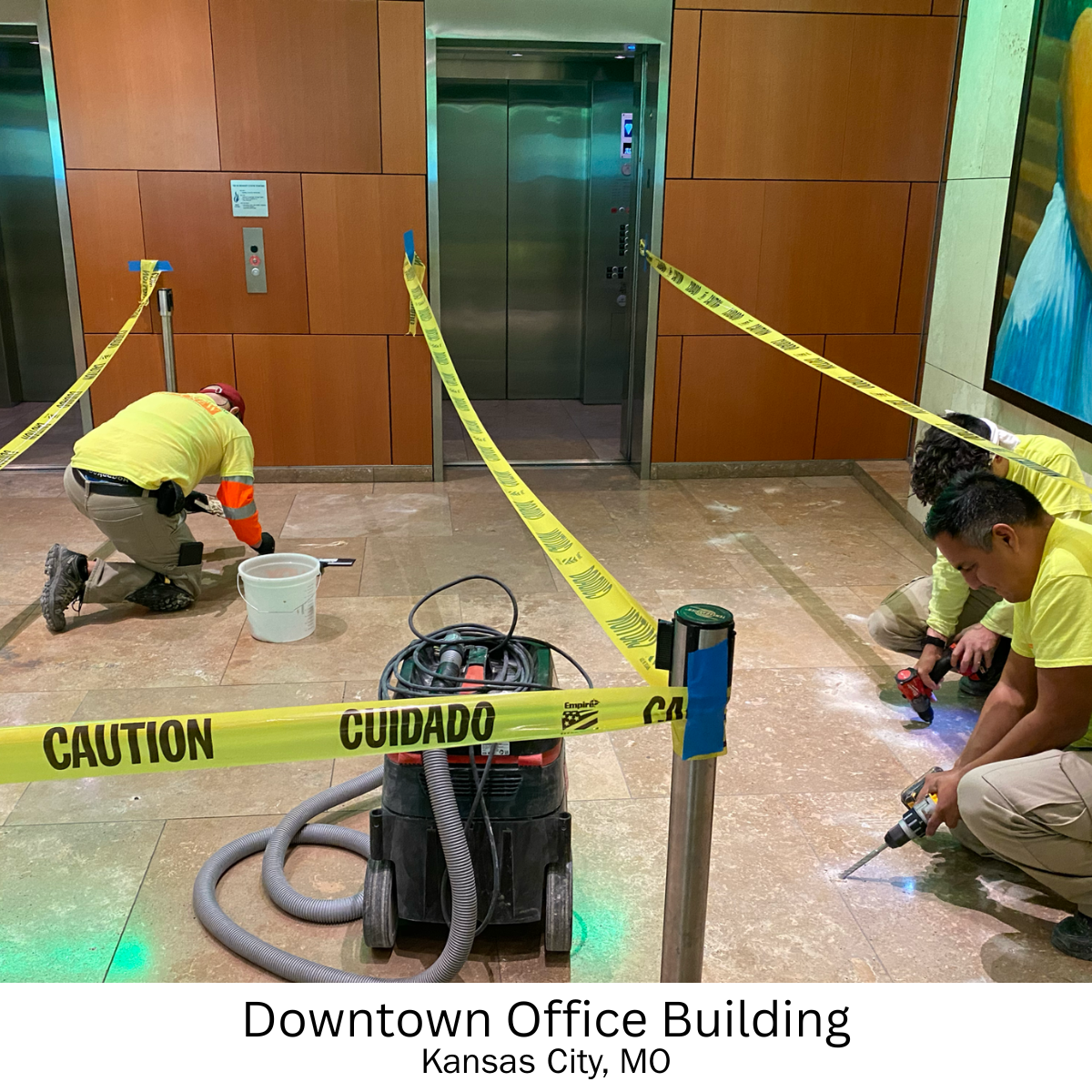
Deep Cleaning
- Years of embedded soil/debris and contaminants are removed from the stone before repairs begin.
Crack & Hole Repair
- Damaged areas are professionally filled using color-matched repair materials designed specifically for natural stone. Missing filler is replaced, and chips and small cracks are repaired.
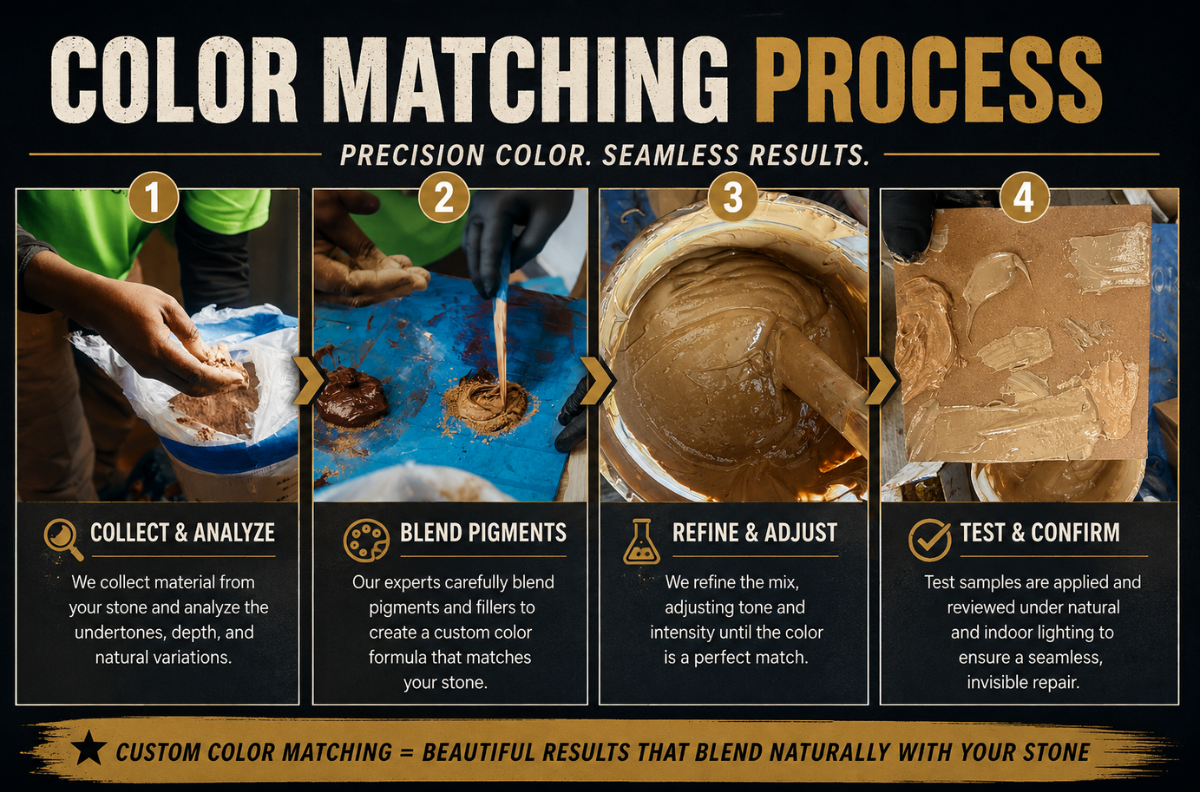
Color Matching
- There are two dominant colors when it comes to travertine: light brown and dark brown. Specialized travertine fillers can closely match the natural stone color and may also be blended with a high-performance resin that provides greater strength, UV stability, and long-lasting durability in high-traffic commercial environments.
Honing the Surface
- Diamond abrasives remove scratches, etching, wear patterns, and minor lippage while creating a smooth, uniform surface.
Polishing (Optional)
- Depending on the desired appearance, the stone can be restored to a matte, satin, honed, semi-polished, or high-polish finish. Many commercial facilities prefer a satin or honed finish because it provides an elegant appearance while helping reduce slip concerns.
Sealing
- A premium penetrating sealer helps protect the stone from staining while allowing it to breathe naturally.
Why Replace Travertine If You Don’t Have To?
Travertine replacement is expensive. Demolition, disposal, matching new stone, installation, grout work, and downtime all add cost. Professional restoration preserves the existing floor while extending its service life for years. For many facilities, restoration delivers outstanding results with significantly less disruption.
Where We Restore Travertine
✓ Office buildings
✓ Hotels
✓ Healthcare facilities
✓ Schools and universities
✓ Country clubs
✓ Commercial lobbies
✓ Government buildings
Why Choose Advanced 360 Total Floor Care?
Natural stone restoration isn’t simply cleaning a floor. It requires specialized equipment, diamond abrasives, repair materials, and experience working with delicate stone surfaces.
Our team understands how to restore travertine while preserving its natural beauty and character. Instead of recommending replacement first, we’ll evaluate whether your existing floor can be professionally restored. Many can.

Restore Your Travertine Floors in Kansas City
If your travertine floors are scratched, dull, cracked, or missing filler, Advanced 360 Total Floor Care can help.
We provide professional travertine repair and restoration services throughout the Kansas City metro, helping commercial properties protect their investment and extend the life of their natural stone flooring.
Contact Advanced 360 Total Floor Care today to schedule an on-site evaluation and see whether your travertine can be restored instead of replaced.
➜ Learn how Stone and Terrazzo Floor Restoration can bring back the natural finish without relying on layers of wax.
FAQs
Can scratched or damaged travertine be repaired instead of replaced?
Yes. In many cases, scratched, chipped, cracked, or worn travertine can be professionally repaired and restored without replacing the entire floor. Restoration typically includes filling holes, repairing cracks, honing away surface damage, polishing, and sealing the stone. This is often much more cost-effective than demolition and replacement.
How long does travertine restoration last?
The lifespan of a restored travertine floor depends on foot traffic, maintenance, and the environment. In most commercial buildings, professionally restored and properly maintained travertine can maintain its appearance for many years. Routine cleaning with stone-safe products and periodic maintenance help maximize its longevity.
How much does travertine restoration cost compared to replacement?
Travertine restoration is typically much less expensive than replacing the floor. Replacement often involves demolition, debris removal, new materials, installation, and business disruption. Restoration preserves the existing stone while repairing damage and renewing its appearance, making it a cost-effective solution for many commercial properties.

Dana writes about commercial cleaning, healthcare environmental services, and professional floor care for Kansas City facilities. Through Advanced 360 Total Floor Care and Sani-SAFE Healthcare in Lenexa, Kansas, Dana shares real-world guidance on facility maintenance, infection prevention, floor preservation, inspection readiness, and creating cleaner, safer environments.