

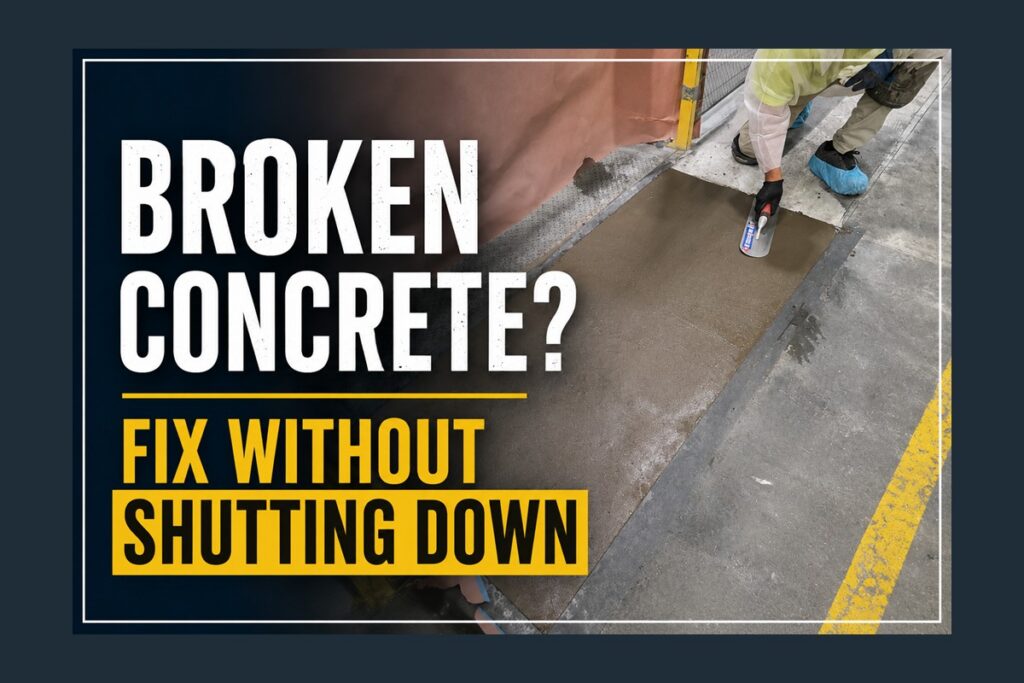
The Floor Isn’t Getting Better on Its Own
Every warehouse manager has seen it.
- A small chip in the concrete.
- A damaged floor joint.
- A crack near a dock door.
- A forklift clips a bollard.
- A corner starts breaking apart.
At first, it doesn’t seem like a big deal.
- The warehouse is still running.
- Forklifts are still moving.
- Production continues.
But every day that traffic rolls over damaged concrete, the problem gets worse.
What could have been a simple repair turns into a larger, more expensive project.
The good news?
Many industrial concrete repairs can now be completed using rapid-setting repair materials that allow areas to return to service in hours—not days.
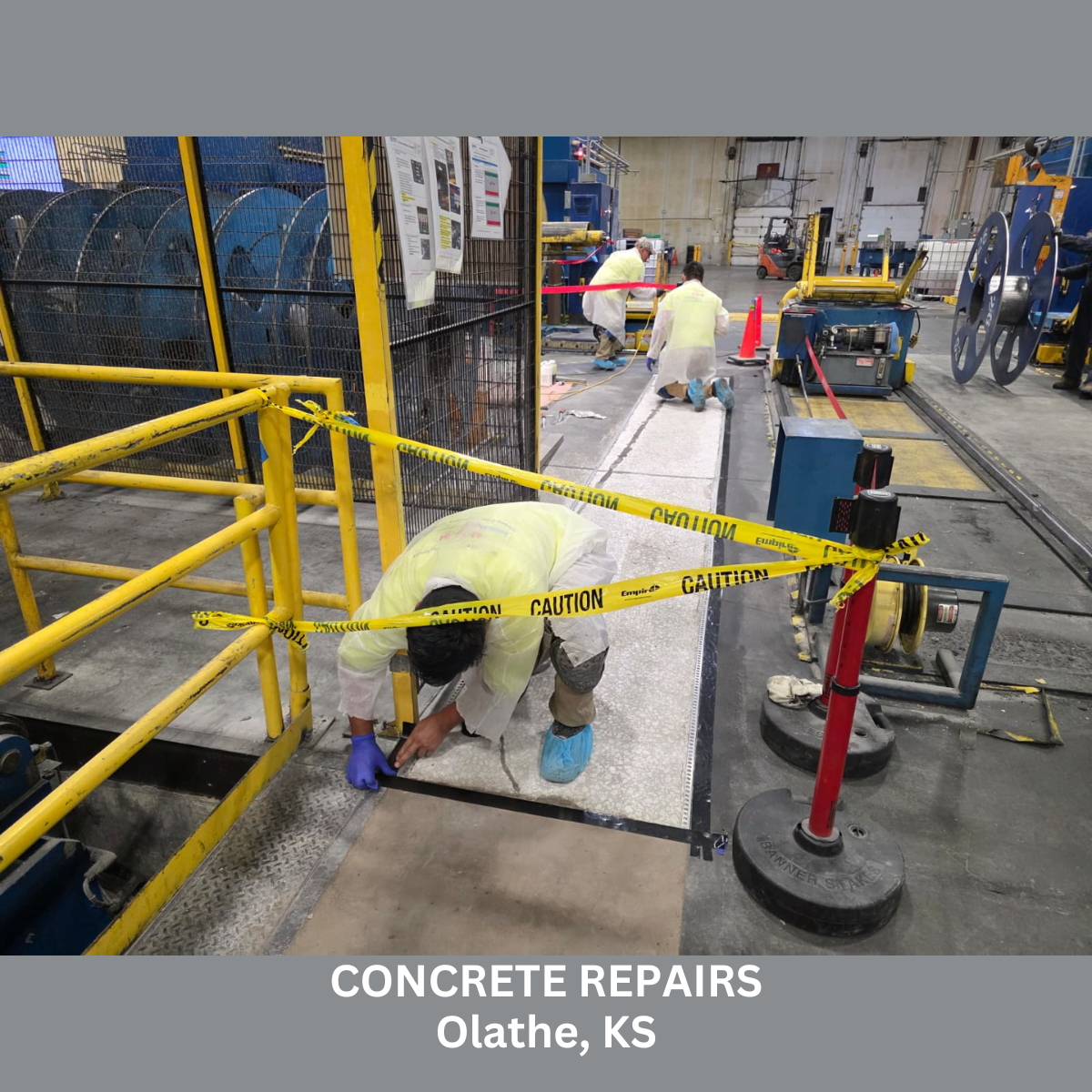
Why Warehouse Concrete Fails
Industrial floors take abuse every day.
Forklifts, pallet jacks, carts, heavy equipment, and constant traffic place tremendous stress on concrete surfaces.
Over time, that abuse shows up as:
- Spalled concrete
- Broken floor joints
- Cracked concrete
- Impact damage
- Surface deterioration
- Trip hazards
- Dock damage
- Bollard damage
The question isn’t whether concrete will wear.
The question is how quickly problems are identified and repaired.
$ $ $ The Hidden Cost of Delaying Repairs $ $ $
Many facility managers postpone repairs because the damage appears cosmetic.
Unfortunately, damaged concrete rarely stays the same.
A small broken area becomes larger.
Forklift wheels begin impacting exposed edges.
Concrete starts breaking away.
Dust increases.
Equipment vibration increases.
Safety concerns increase.
Before long, what could have been repaired in a few hours becomes a much larger reconstruction project.
Common Concrete Problems We See in Kansas City Warehouses
1. Spalled Concrete – Surface is Cracking/Chipping/Flaking
- Forklift traffic
- Impact damage
- Weak concrete
- Joint deterioration
- Freeze-thaw exposure near loading areas
2. Broken Joint Edges
- When joint filler fails, forklift wheels begin striking the concrete edges.
- Over time, the edges chip and break away.
- This creates rough travel surfaces, vibration, and ongoing deterioration.
3. Cracks and Surface Failures
- Concrete naturally moves.
- Small cracks can eventually become larger structural concerns if ignored.
4. Loading Dock Damage
- Dock approaches experience some of the highest traffic and impact forces in a facility.
- Repeated loading activity often causes cracking, spalling, and deterioration.
5. Rack and Equipment Impact Areas
- High-traffic forklift zones frequently experience localized damage from repeated impacts and turning movements.
Bollard Damage Is Often More Serious Than It Appears
One of the most overlooked concrete problems in industrial facilities is bollard damage.
Forklifts hit bollards every day.
Sometimes the damage is obvious.
Sometimes it isn’t.
A bollard may appear intact while the concrete foundation surrounding it has been weakened. We commonly find:
- Leaning bollards
- Loose bollards
- Cracked concrete around the base
- Broken concrete foundations
- Exposed anchor bolts
- Impact-damaged floor areas
The purpose of a bollard is to protect people, equipment, rack systems, and building structures.
When the surrounding concrete is compromised, that protection is reduced.
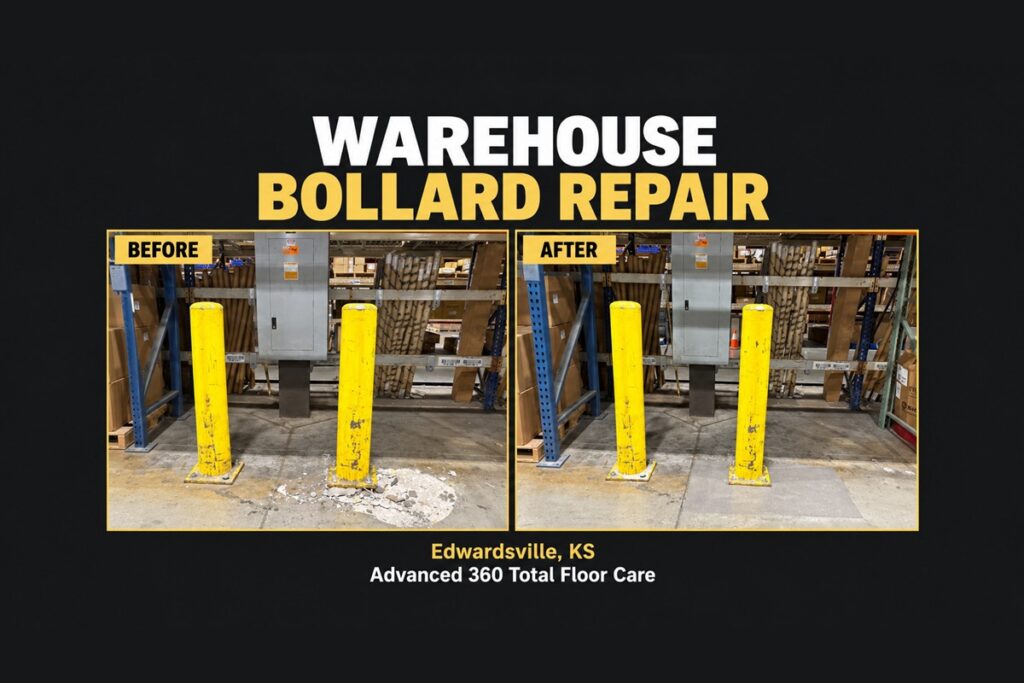
Using rapid-setting repair materials, damaged bollard foundations can often be repaired and restored with minimal disruption to warehouse operations.
The Problem with Traditional Concrete Repairs
Historically, many concrete repairs required extended shutdowns.
Areas were often closed for days while waiting for concrete to gain strength.
For most warehouses, that isn’t practical.
Every hour of downtime affects:
- Productivity
- Shipping schedules
- Material movement
- Labor efficiency
- Customer service
That is why many facility managers delay repairs until the damage becomes unavoidable.
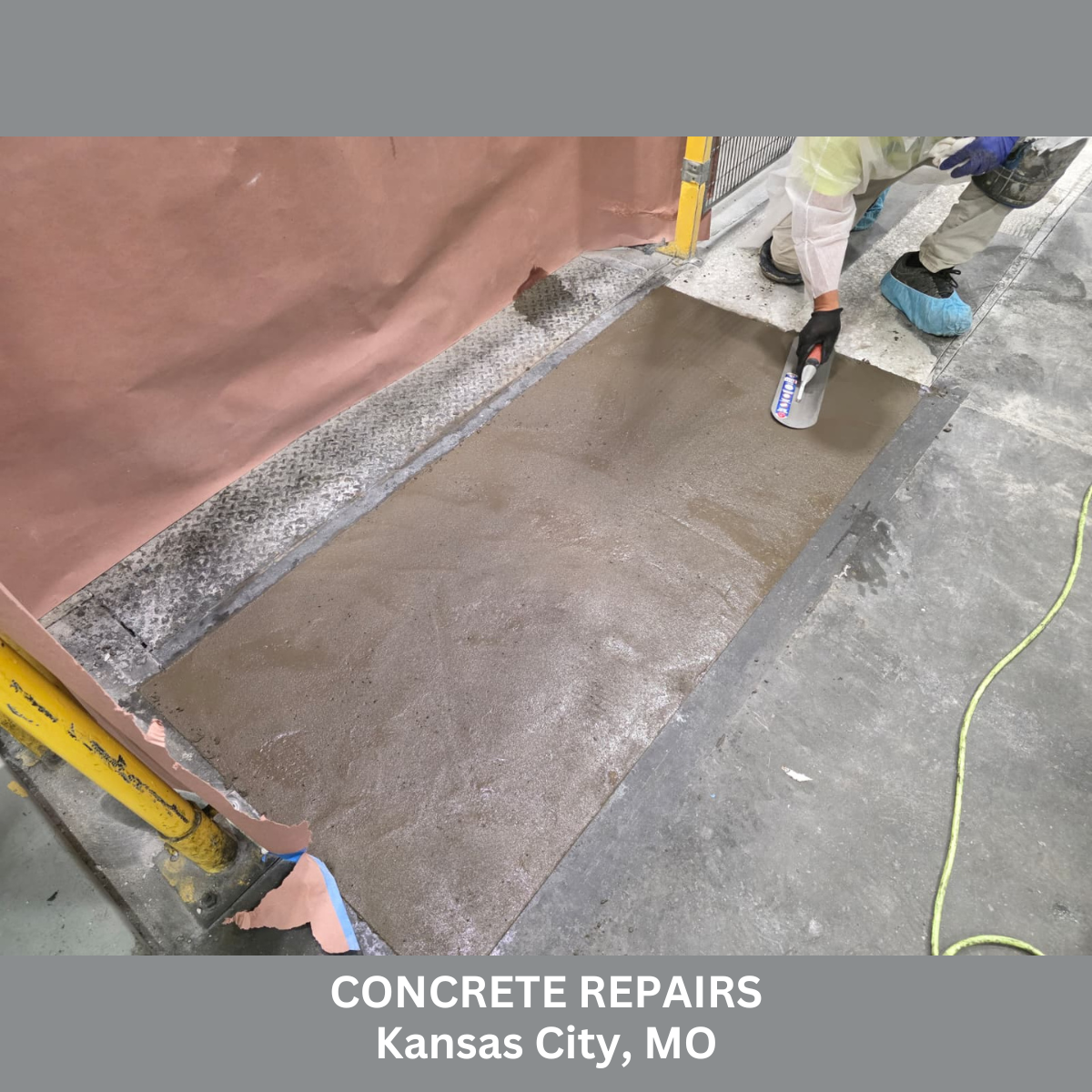
The Advantage of Fast-Cure Concrete Repair Systems
Modern rapid-setting repair materials have changed the way warehouse repairs are performed.
These systems are designed to:
- Cure quickly
- Develop high early strength
- Resist forklift traffic
- Minimize downtime
- Reduce operational disruption
Depending on the repair, many areas can return to service the same day.
Instead of shutting down operations for several days, repairs can often be completed during off-hours and reopened shortly afterward.
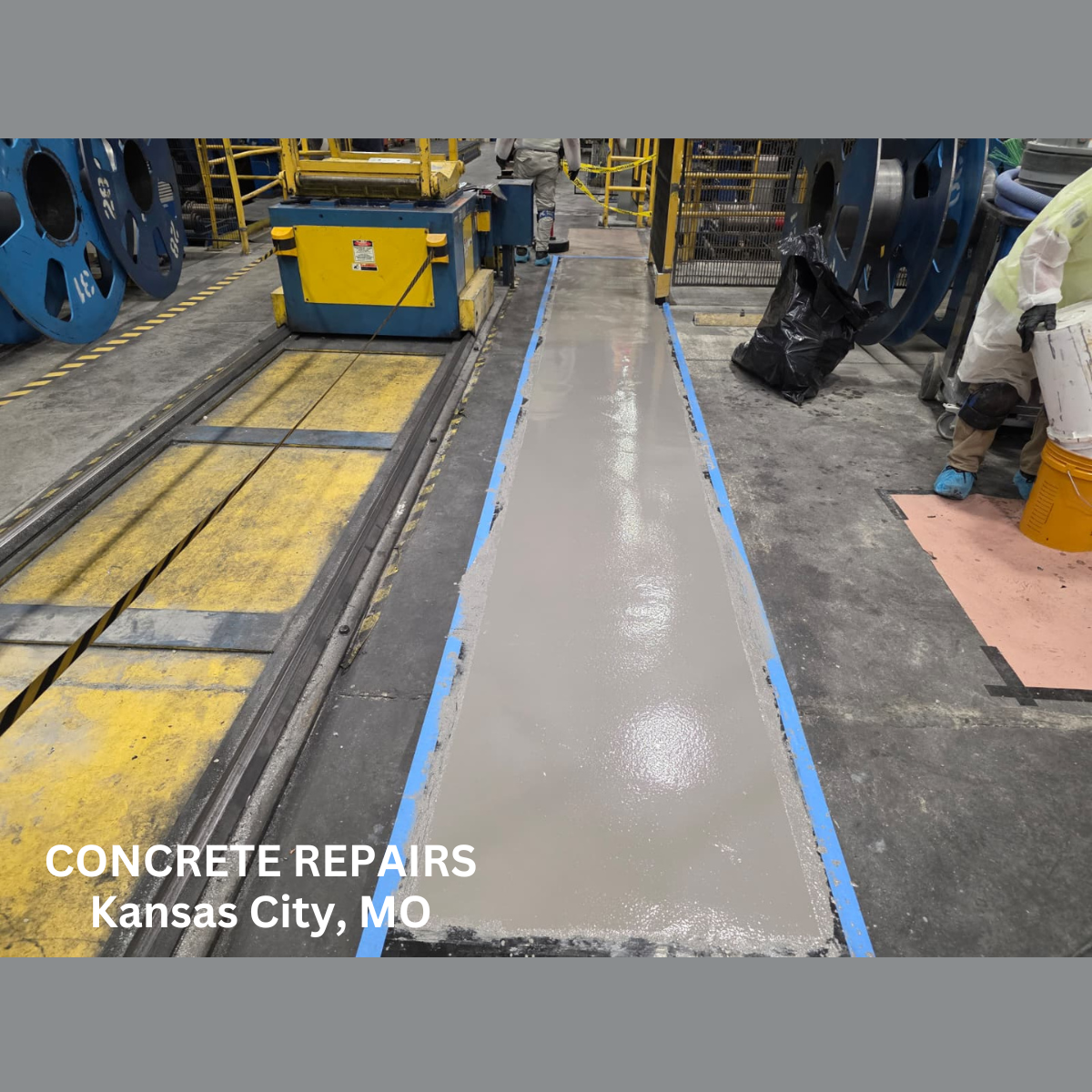
Where Fast-Cure Repairs Work Best
> Warehouse Floors
- Repairing spalls, chips, cracks, and deteriorated concrete.
> Distribution Centers
- Correcting high-traffic forklift damage.
> Manufacturing Facilities
- Repairing concrete without interrupting production schedules.
> Loading Docks
Restoring damaged dock approaches and transition areas.
> Floor Joints
- Rebuilding broken joint edges and protecting against future damage.
> Bollard Foundations
- Repairing impact-damaged concrete around protective bollards.
What Makes a Repair Last?
The repair material is important.
But the installation process matters just as much.
Long-lasting repairs require:
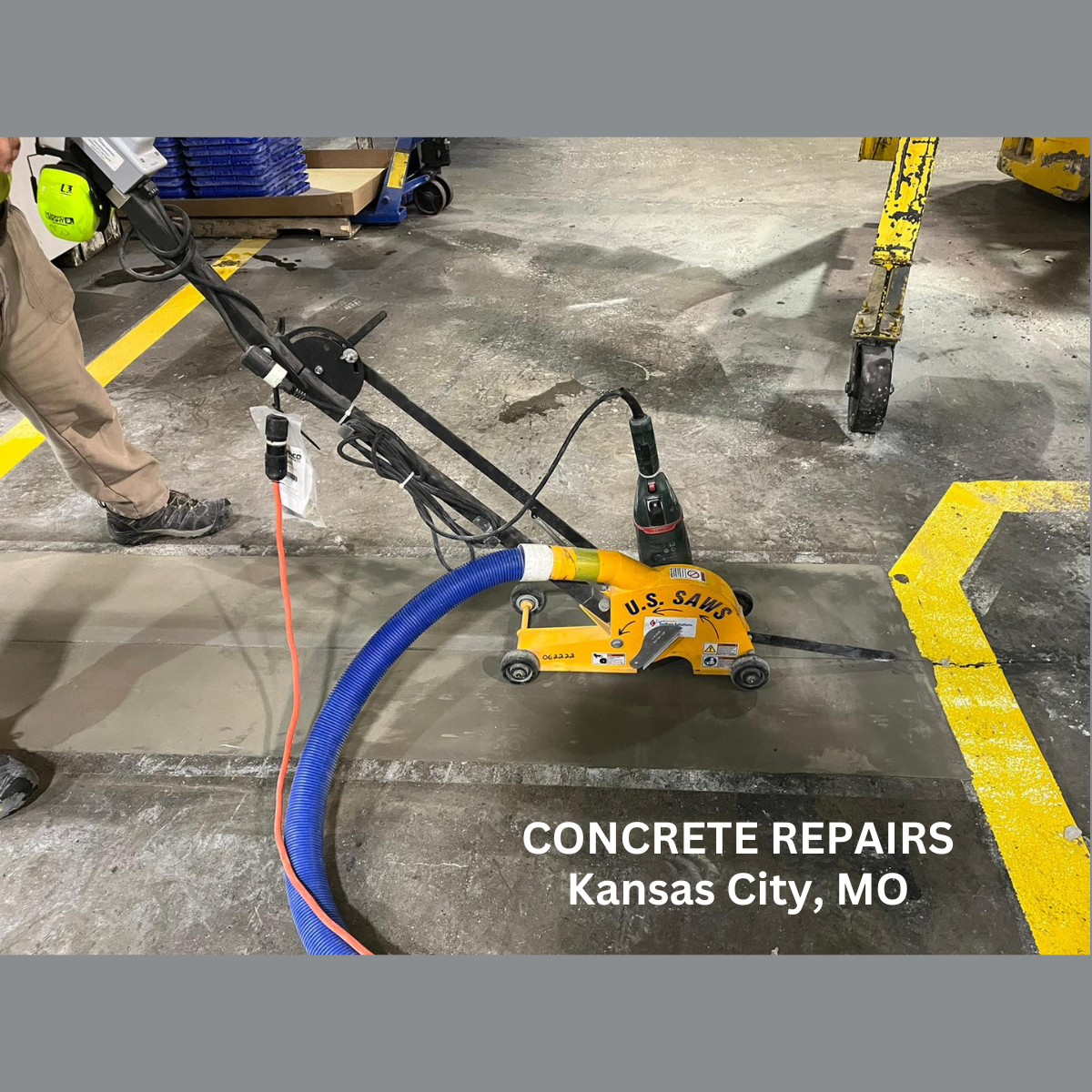
Proper Concrete Removal
- All weak and deteriorated concrete must be removed.
Mechanical Preparation
- The repair area must be properly prepared to create a strong bond.
Structural Edge Preparation
- Repair areas should be keyed and reinforced when necessary.
Correct Material Selection
- Not every repair material performs equally in every environment.
Experienced Installation
- Proper installation ensures the repair performs under real-world traffic conditions.

Shortcuts may save time initially but often result in premature failure.
Watch for Warning Signs Your Facility Needs Repairs
☐ Chipped concrete
☐ Broken floor joints
☐ Spalled concrete
☐ Cracks
☐ Trip hazards
☐ Forklift vibration
☐ Damaged dock areas
☐ Leaning bollards
☐ Cracked bollard foundations
☐ Exposed anchor bolts
☐ Surface deterioration
The earlier these issues are addressed, the more options you typically have.
Why Facility Managers Choose Rapid-Setting Repairs
Warehouse managers are not looking for more projects.
They’re looking for fewer interruptions.
Rapid-setting repair systems allow facilities to:
- Improve safety
- Reduce downtime
- Protect equipment
- Extend floor life
- Avoid larger reconstruction costs
- Keep operations moving
In many cases, repairing the damage today costs far less than replacing larger sections of concrete tomorrow.
Final Thoughts
Broken concrete is more than a cosmetic problem.
It affects safety, productivity, equipment performance, and operating costs.
Whether you’re dealing with spalled concrete, damaged floor joints, loading dock deterioration, or forklift-damaged bollards, addressing the problem early is usually the most cost-effective solution.
Modern rapid-setting repair systems make it possible to repair many warehouse floor problems quickly, safely, and with minimal disruption to operations.
About Advanced 360 Total Floor Care
Advanced 360 Total Floor Care specializes in industrial warehouse concrete repairs throughout Kansas City, including rapid-setting concrete repairs, floor joint reconstruction, bollard damage repairs, loading dock repairs, trip hazard correction, floor stabilization, epoxy flooring, safety striping, and industrial concrete restoration.
Need to repair broken concrete without shutting down operations?
➜ See how Warehouse Concrete Floor Repair Solutions can address damaged warehouse floors while minimizing disruption to your operations.
Schedule your complimentary Warehouse Floor Health Check and discover how many concrete repairs can be completed and returned to service the same day. Call 913-322-6200 or email [email protected]
FAQs
Can warehouse concrete floors be repaired without shutting down operations?
- Yes. Many concrete floor repairs can be completed by isolating specific work areas and coordinating repairs around production schedules, shifts, or off-hours. Fast-curing repair materials can also help reduce downtime and allow repaired areas to return to service quickly.
What types of warehouse concrete floor damage can be repaired?
- Common repairs include spalled concrete, damaged control joints, broken joint edges, cracks, holes, surface deterioration, trip hazards, and damage caused by forklifts and other material-handling equipment. The right repair method depends on the type of damage, traffic conditions, and condition of the surrounding concrete.
How quickly can a repaired warehouse floor be put back into service?
- It depends on the repair system and the conditions inside the facility. Some industrial repair materials are designed for rapid curing and can allow areas to return to service much faster than traditional concrete repairs. For active warehouses and manufacturing facilities, the repair system should be selected with the facility’s required downtime in mind.

Dana writes about commercial cleaning, healthcare environmental services, and professional floor care for Kansas City facilities. Through Advanced 360 Total Floor Care and Sani-SAFE Healthcare in Lenexa, Kansas, Dana shares real-world guidance on facility maintenance, infection prevention, floor preservation, inspection readiness, and creating cleaner, safer environments.