

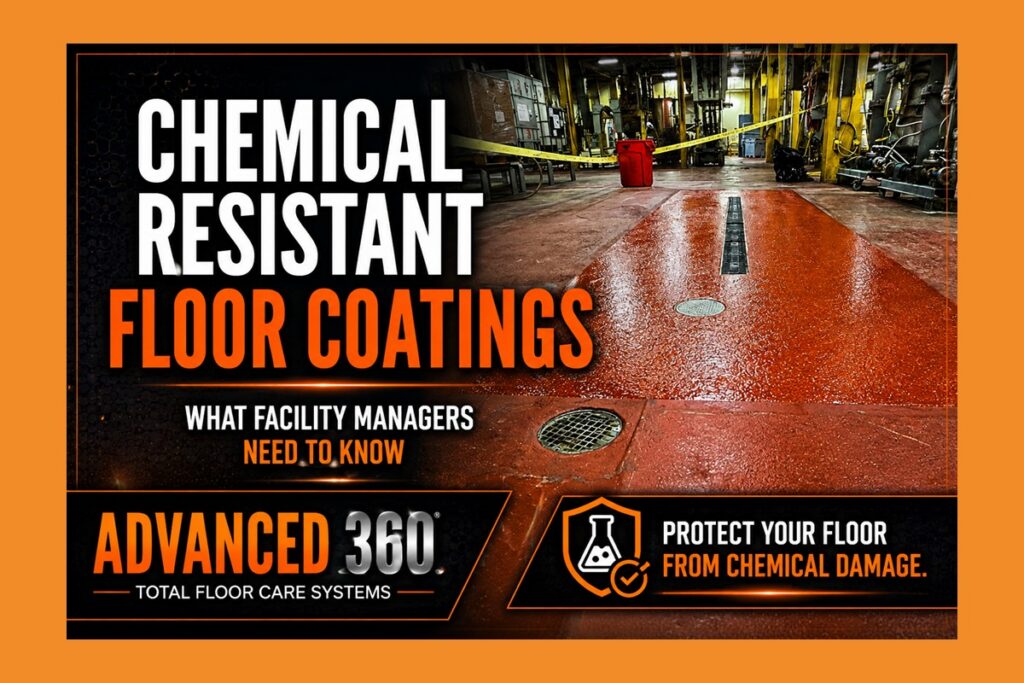
Is Your Floor Being Damaged by Chemicals?
Many warehouse managers, plant managers, and facility managers don’t realize their floor is under attack until the damage becomes obvious.
At first, everything looks fine – then the warning signs start to appear:
- Peeling Coatings
- Bubbling Epoxy
- Soft Spots
- Surface Discoloration
- Concrete Erosion
- Chemical Stains
- Cracks
- Recurring Repairs
In many cases, the problem isn’t poor workmanship or the floor itself – it’s because the coating system was never designed to handle the chemicals used in the facility.
If your facility is exposed to acids, caustics, solvents, oils, cleaning chemicals, or process chemicals, standard floor coatings may not be sufficient.
What Is a Chemical Resistant Floor Coating?
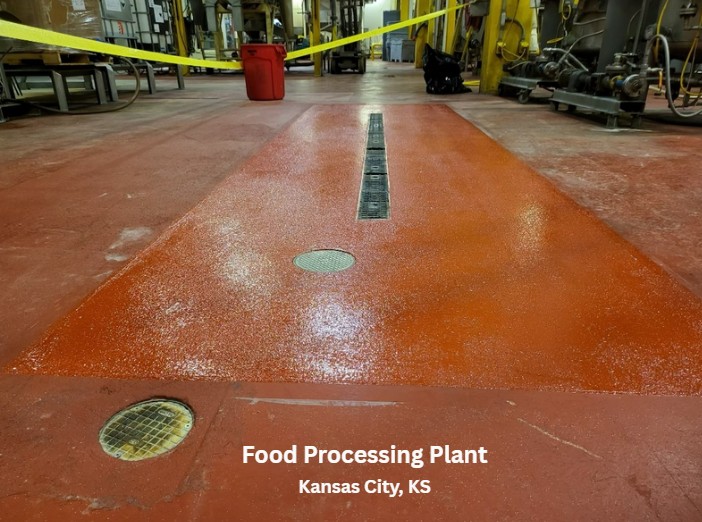
A chemical resistant floor coating is a specialized flooring system designed to protect concrete from chemical attack.
Unlike traditional coatings that primarily provide appearance and wear resistance, our Kansas City chemical-resistant floor systems are designed to withstand exposure to aggressive substances that can damage both coatings and concrete.
- The goal isn’t simply to protect the floor surface.
- The goal is to protect the concrete slab underneath.
Because once chemicals reach the concrete flooring repair costs increase dramatically.
Why Concrete Needs Protection
Concrete may look solid, but it is actually porous.
Many chemicals can penetrate concrete surfaces, causing damage that can lead to safety concerns, downtime, and expensive repairs.
Depending on the chemical exposure, damage may include:
- Surface erosion
- Pitting
- Spalling
- Dusting
- Cracking
- Delamination
- Structural deterioration
The longer the exposure continues, the more extensive the damage becomes.
What begins as a coating problem can eventually become a concrete restoration project.
Industries That Commonly Need Chemical Resistant Flooring
Facilities that require more than a standard epoxy floor include:
| Manufacturing Plants |
Manufacturing environments often expose floors to oils, solvents, coolants, degreasers, and process chemicals.
| Food Processing Facilities |
Food plants frequently experience chemical washdowns, sanitation procedures, and thermal shock.
| Distribution Centers |
Battery charging stations may expose floors to sulfuric acid from forklift batteries.
| Pharmaceutical Facilities |
Chemical handling and sanitation procedures require specialized flooring systems.
| Mechanical Rooms |
Mechanical spaces often encounter oils, chemicals, water exposure, and maintenance traffic.
| Wastewater Treatment Facilities |
Harsh chemical environments can quickly damage standard coatings.
Why Standard Epoxy Isn’t Always Enough
Many facility managers hear the word “epoxy” and assume all epoxy floors are the same.
They aren’t.
Traditional epoxy systems work well in many environments.
However, some chemicals can attack standard epoxy coatings over time.
Common failures we have seen include:
- Peeling
- Blistering
- Softening
- Discoloration
- Loss of adhesion
When this occurs, the coating is no longer protecting the concrete underneath.
That is when major damage often begins.
Hot Water and Aggressive Cleaning
The right chemical-resistant flooring system can withstand aggressive cleaning procedures, including:
- Hot water washdowns
- Pressure washing
- Steam cleaning
- Harsh degreasers.
Specialized systems such as urethane cement are designed to resist thermal shock and maintain their bond to the concrete even in environments that require frequent sanitation and intensive cleaning.
The Best Chemical Resistant Flooring Systems
The best flooring system depends on the chemicals present in the facility.
Novolac Epoxy Flooring systems provide significantly greater chemical resistance than many traditional epoxy systems.
These systems are commonly used where facilities encounter:
- Acids
- Solvents
- Harsh cleaning chemicals
- Aggressive process chemicals
Benefits include:
- Superior chemical resistance
- Long-term durability
- Protection of the concrete substrate
Urethane Cement Flooring systems are often selected for environments exposed to both chemicals and heavy traffic because of the benefits they offer:
- Chemical resistance
- Impact resistance
- Thermal shock resistance
- Moisture tolerance
- Long service life
Urethane cement flooring systems are frequently used in food processing, manufacturing, and industrial facilities.
Warning Signs Your Floor May Be Failing
Many facilities don’t realize there is a problem until significant damage has occurred.
What do you watch for?
☐ Peeling coatings
☐ Bubbling epoxy
☐ Soft spots
☐ Chemical staining
☐ Concrete erosion
☐ Surface pitting
☐ Spalling concrete
☐ Cracks
☐ Dusting concrete
☐ Recurring repair areas
☐ Coating failure near washdown areas
If any of these conditions exist, the concrete may not be protected adequately by the flooring system.
$$$ The Cost of Waiting $$$
Chemical damage rarely improves on its own. As exposure continues:
- Concrete deterioration spreads
- Repair costs increase
- Safety concerns grow
- Downtime risks increase
- Facility appearance suffers
What could have been solved with a properly designed floor system often becomes a much larger and expensive repair project.
How to Choose the Right Chemical Resistant Floor Coating
Before selecting a flooring system, ask:
- What chemicals contact the floor?
- How often does exposure occur?
- Is thermal shock present?
- Does the floor experience heavy traffic?
- Is moisture a concern?
- What cleaning procedures are used?
The answers help determine whether a novolac epoxy, urethane cement, or another specialized flooring system is the best solution.
Chemical Resistant Floor Coating Contractor in Kansas City
Not every industrial facility has the same flooring requirements.
A coating system that performs well in a warehouse may fail quickly in a chemical processing area.
Choosing the correct system requires understanding of the environment, the chemicals involved, and the long-term performance requirements of the facility.
About Advanced 360 Total Floor Care
Advanced 360 Total Floor Care specializes in chemical resistant floor coatings throughout Kansas City, including Novolac epoxy systems, urethane cement flooring, industrial floor coatings, manufacturing plant flooring, battery charging station flooring, warehouse floor repairs, and concrete restoration.
➜ Explore Industrial Floor Coating Solutions in Kansas City designed for chemical exposure, heavy traffic, and demanding facility conditions.
If your facility is experiencing coatings that are peeling, chemical damage, or deteriorating concrete, schedule a complimentary Industrial Floor Assessment and learn how the right flooring system can protect your facility for years to come.

Dana writes about commercial cleaning, healthcare environmental services, and professional floor care for Kansas City facilities. Through Advanced 360 Total Floor Care and Sani-SAFE Healthcare in Lenexa, Kansas, Dana shares real-world guidance on facility maintenance, infection prevention, floor preservation, inspection readiness, and creating cleaner, safer environments.