



What Kansas City Area Facility Managers Need to Know
YES . . . in many cases marble floors can absolutely be professionally restored without replacement.
Marble surfaces that appear dull, scratched, cloudy, or heavily worn can often be brought back to life through professional honing and polishing processes.
That’s important because many facility managers assume once marble loses its shine, replacement is the only option.
Usually, it’s not.
In commercial facilities that use marble floors in Kansas City, the floors gradually lose their appearance due to:
- foot traffic
- abrasive soil
- improper cleaning chemicals
- moisture
- wear and use
The good news is that most of that damage happens at the surface level.
Which means the floor itself is often still structurally sound and restorable.
If you manage a facility with marble flooring, you’ve probably had this moment before:
You walk through the lobby one morning and realize the floors just don’t look the way they used to.
- The shine is gone.
- Traffic lanes look dull.
- Scratches seem more noticeable.
- Certain areas almost look cloudy no matter how often they’re cleaned.
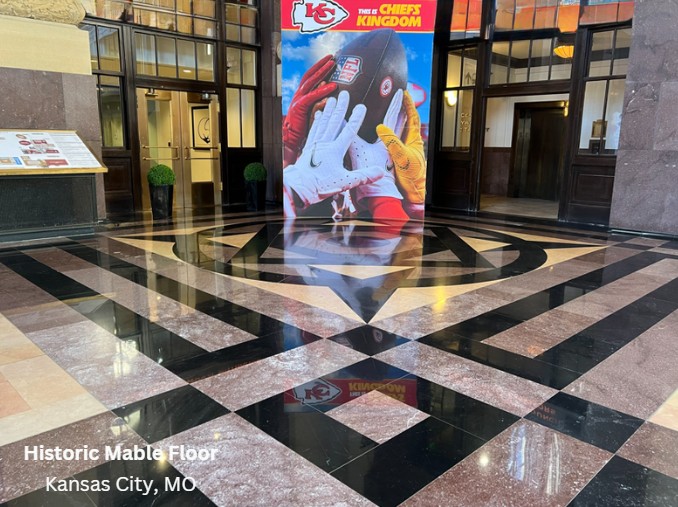
Why Marble Floors Lose Their Shine
In commercial facilities, marble flooring deals with constant abuse every day.
Foot traffic brings in:
- dirt
- sand
- salt
- moisture
- fine abrasives
Those materials slowly scratch the surface of the stone.
At the same time, improper cleaning chemicals can create etching or dull spots that regular mopping cannot fix.
This is especially common when:
- improper cleaners are used
- general-purpose chemicals are applied incorrectly
- the floor is maintained for appearance only instead of stone preservation
Eventually, the marble starts reflecting light unevenly.
That’s when facility managers begin noticing:
- cloudy areas
- dull traffic lanes
- inconsistent shine
- visible wear patterns
Professional Marble Restoration Is a Mechanical Process

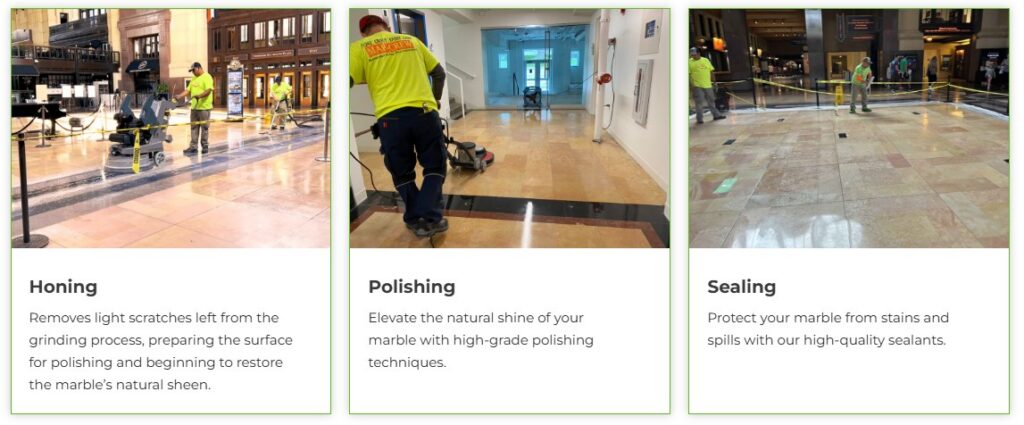
One of the most important things to understand is that true marble restoration is not simply “making the floor shiny.”
Professional restoration is a controlled mechanical process designed to refine and restore the stone surface itself.
Depending on the condition of the floor, restoration may involve:
- diamond honing
- surface refinement
- polishing
- stain treatment
- scratch reduction
- edge detailing
The goal is to restore:
- clarity
- reflectivity
- smoothness
- uniform appearance
without replacing the stone.
Restoration vs. Replacement
For many Kansas City facilities, replacement sounds overwhelming because it usually is.
Replacing marble flooring can involve:
- major downtime
- demolition
- dust and disruption
- noise
- traffic rerouting
- material lead times
- significant labor costs
Professional restoration is often dramatically less disruptive.
In many cases, facilities can preserve the original marble while improving the overall appearance of the space substantially.
That’s especially important in:
- office buildings
- hotels
- country clubs
- healthcare facilities
- civic buildings
- educational facilities
- historic properties
because marble flooring is usually part of the building’s overall image and first impression.
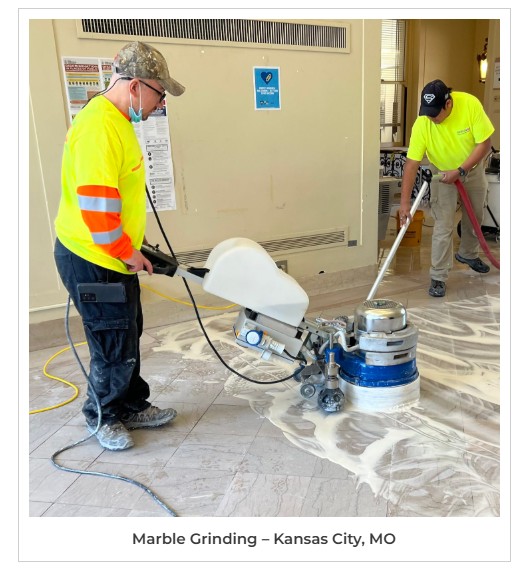
Not All Marble Floors Need the Same Approach
This is where experience matters.
Different marble surfaces react differently depending on:
- stone type
- age
- finish
- previous maintenance
- traffic levels
- environmental exposure
Some floors need: light polishing
Others require: aggressive honing and restoration
And some facilities benefit from: ongoing maintenance programs designed to prevent the floor from reaching severe wear conditions again.
The biggest mistake facilities make is waiting too long.
Once damage becomes severe, restoration becomes more difficult, more expensive, and more time-consuming.
Appearance Impacts More Than People Realize
Marble flooring is usually installed in spaces designed to create a strong impression.
When those surfaces become dull or worn, the entire facility can begins to feel:
- older
- less maintained
- less professional
even when the building itself is otherwise clean.
That’s why marble restoration is often less about “floor care” and more about:
- image
- perception
- facility presentation
- long-term asset protection
In high-visibility buildings, floors quietly shape how people feel about the entire property.

Why Professional Maintenance Matters After Restoration
One of the biggest reasons marble floors become dull again too quickly is improper maintenance after restoration.
Many facilities unknowingly use:
- overly aggressive pads
- acidic chemicals
- incorrect cleaners
- maintenance procedures designed for other floor types
Marble is a natural stone surface and needs to be maintained differently than:
- VCT
- LVT
- concrete
- epoxy flooring
A proper maintenance plan helps:
- preserve shine
- reduce surface wear
- minimize scratching
- extend restoration life
- protect the investment long term
For many facilities, ongoing maintenance is what determines whether the floor still looks great years later or begins deteriorating again after only a short period of time.
Can Marble Floors Be Restored?
. . . In many cases, yes.
The key is understanding:
- The condition of the stone
- The cause of the damage
- The correct restoration process
- The long-term maintenance strategy afterward
For Kansas City area facility managers, professional marble restoration can often extend the life of existing flooring significantly while avoiding the cost and disruption of replacement.
And when done correctly, the difference can completely transform how a facility looks and feels.
Frequently Asked Questions
How Often Should Marble Floors Be Professionally Restored?
It depends on traffic levels, maintenance practices, and the type of marble. High-traffic commercial facilities may benefit from periodic polishing or maintenance restoration before severe wear develops.
Can Scratches And Dull Spots Be Removed From Marble?
In many cases, yes. Professional honing and polishing processes can often reduce or eliminate surface scratches, etching, and dull traffic patterns.
Is Marble Restoration Less Expensive Than Replacement?
Typically, yes. Restoration is often significantly more cost-effective and less disruptive than removing and replacing marble flooring entirely.
➜ Explore Commercial Marble Floor Restoration for dull, scratched, etched or stained marble floors.
Your floors are one of the first things people notice when they walk into your facility. Professional marble restoration can help make sure they still reflect the image you want your building to project. To learn more about this call 913-322-6200 or email [email protected].

Dana writes about commercial cleaning, healthcare environmental services, and professional floor care for Kansas City facilities. Through Advanced 360 Total Floor Care and Sani-SAFE Healthcare in Lenexa, Kansas, Dana shares real-world guidance on facility maintenance, infection prevention, floor preservation, inspection readiness, and creating cleaner, safer environments.