

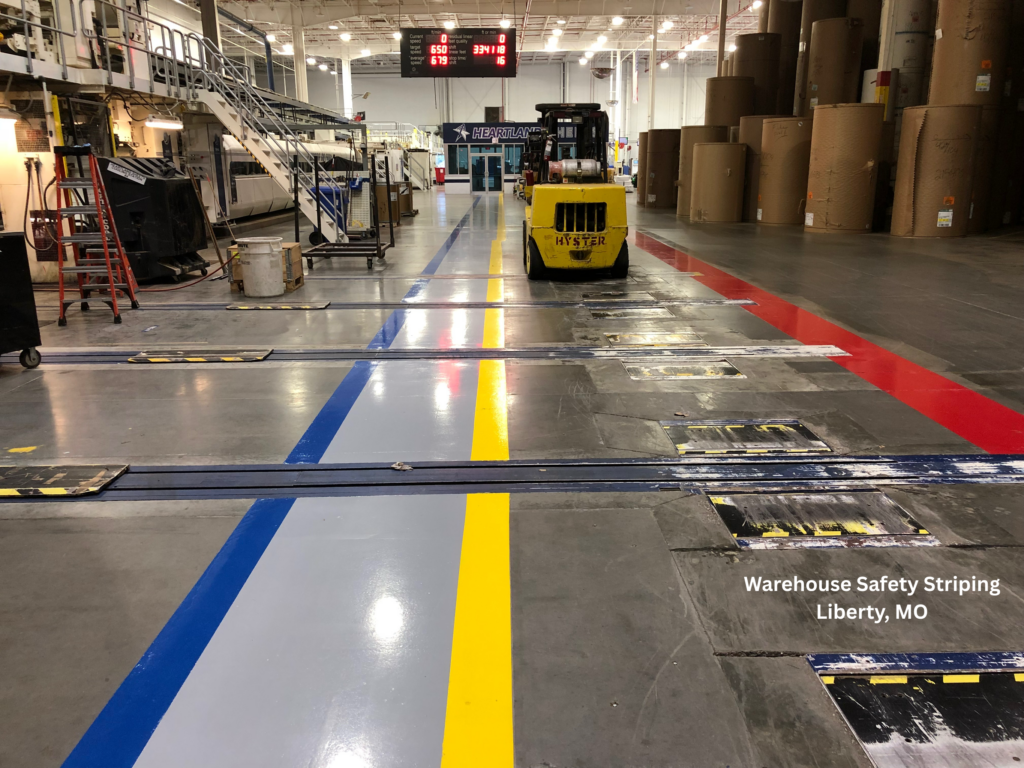
Warehouse safety striping is one of the most cost-effective ways to improve safety, organization, and traffic flow in industrial and warehouse facilities across the Kansas City metro area. From distribution centers to warehouses safety striping helps separate pedestrians from forklifts and supports OSHA awareness. Clear floor markings guide employees, define work zones, and reduce confusion in busy industrial environments. Well-planned striping helps forklift operators identify travel paths, loading areas, staging zones, and pedestrian walkways, all of which contribute to a safer and more organized facility. Facility Managers often ask one question first:
How Much Does Warehouse Safety Striping Cost?
The answer depends on several factors including stripe width, color, traffic type, materials used, and how quickly the facility needs the area returned to service.
Stripe Width and Cost Impact
Stripe width directly affects both material usage and installation time.
Common widths used in warehouses include:
4-Inch Stripes
Four-inch stripes are typically used for light foot-traffic guidance or smaller visual boundaries. These require less material and are usually the most economical option.
6-Inch Stripes
Six-inch stripes are commonly used for pedestrian walkways and safety paths. This width provides better visibility while still remaining relatively cost-efficient.
8-Inch Stripes
Eight-inch stripes are frequently used for forklift lanes, safety zones, and high-visibility areas where larger equipment operates. Because wider stripes require more coating material and additional application time, the overall cost generally increases as stripe width increases.
Stripe Color Selection
Color choice can also influence the overall cost of warehouse striping.
Yellow Striping
Yellow is the most commonly used safety stripe color in warehouses and is typically the most cost-effective option. It provides strong visibility and is widely recognized for safety markings.
Red, Blue, and Green Striping
Other colors such as red, blue, and green are often used for specific operational purposes, including fire safety zones, equipment storage areas, or department-specific pathways. These colors generally cost more because the pigments and coatings required to achieve strong color coverage are more expensive.
Multi-Color Layouts
Some facilities implement multi-color striping systems to organize workflow, designate departments, or improve safety compliance. While highly effective for organization, multi-color layouts require more planning, layout time, and labor during installation.
Foot Traffic vs. Forklift Traffic
The type of traffic using the space has a significant impact on striping cost and durability.
Foot-Traffic Areas
Areas used primarily by pedestrians typically require lighter-duty coatings. These materials are easier to install and less expensive. Because pedestrian traffic causes minimal wear, these stripes often last longer with minimal maintenance.
Forklift Traffic Areas
Forklift lanes experience much heavier wear due to tire friction, turning forces, braking, and constant traffic. Striping in these areas usually requires heavier-duty industrial coatings designed to withstand the stress of forklift operations. While these materials cost more initially, they significantly improve durability and reduce frequent repainting.
Forklift Tire Marks and Wear
- Facilities with high forklift traffic, tight turning areas, or heavy loads often experience faster stripe wear.
- Forklift tires generate friction that can quickly wear down standard floor paints. In high-traffic areas such as intersections, staging zones, and dock approaches, higher-performance materials are typically recommended.
- These coatings provide better adhesion, improved abrasion resistance, and longer service life.
- Although they cost more upfront, they often reduce the need for frequent touch-ups and long-term maintenance.
Cure Time and Scheduling
Another factor that affects cost is how quickly the facility needs the area returned to service.
Standard Cure Materials
Standard-cure striping materials are typically the most economical option. However, they require longer drying or curing times before the area can safely handle traffic. For facilities with flexible schedules or low-traffic zones, this option often works well.
Fast-Cure Materials
- Fast-cure coatings allow the floor to be returned to service much more quickly, sometimes within the same day.
- These materials are commonly used in Kansas City warehouses that operate around the clock and cannot afford extended downtime.
- Because fast-cure products are more specialized, they typically increase the project cost.
After-Hours Installation
Many warehouses prefer striping work to be completed during evenings, weekends, or scheduled shutdowns to minimize operational disruptions. While this scheduling provides operational flexibility, it may increase costs due to labor premiums and limited working windows.
Typical Kansas City Cost Considerations
In the Kansas City market, warehouse safety striping costs are influenced by several key factors:
- Stripe width
- Stripe color
- Total linear footage
- Surface condition of the concrete
- Type of traffic (pedestrian or forklift)
- Material durability requirements
- Cure-time needs
- Scheduling or after-hours work
Facilities requiring highly durable striping for forklift lanes or fast-return-to-service installations will typically see higher costs than pedestrian-only areas using standard materials.
In many cases, properly planned striping can last several years before needing significant maintenance.
Summary
Warehouse safety striping is one of the simplest and most cost-effective ways to improve safety and organization in industrial environments. Clearly defined walkways, forklift lanes, and work zones help reduce confusion, improve traffic flow, and reinforce safety awareness throughout the facility. By choosing the correct stripe width, color, material, and installation schedule, Kansas City warehouses can create durable striping systems that support both safety and long-term operational efficiency.
Frequently Asked Questions
How much does warehouse safety striping cost per linear foot?
In the Kansas City area, warehouse safety striping typically ranges between $0.50 and $2.00 per linear foot, depending on stripe width, color, surface preparation requirements, and material type. Forklift-traffic areas and high-durability coatings generally fall toward the higher end of the range.
How long does warehouse striping last?
In pedestrian areas, striping can often last three to five years or longer. In forklift traffic lanes or high-wear areas, striping may need maintenance sooner depending on traffic levels, turning patterns, and material durability.
Does warehouse striping require shutting down operations?
Not always. Many facilities schedule striping projects in phases, after hours, or during weekends so operations can continue with minimal disruption. Fast-cure coatings can also allow areas to return to service quickly.
If you want a clear recommendation, we can walk your space, assess your floors, and help you develop a plan that fits your facility’s needs. Call 912-322-6200 or email [email protected] to start the conversation today.

Dana shares simple, helpful floor-care insights for Advanced 360 Floor Care to support Kansas City businesses in keeping their facilities safe, clean, and professional.

